
GPSNR Working Groups Update: June 2022

Share This Post

Here are all their updates from the last month:

Strategy and Objectives Working Group

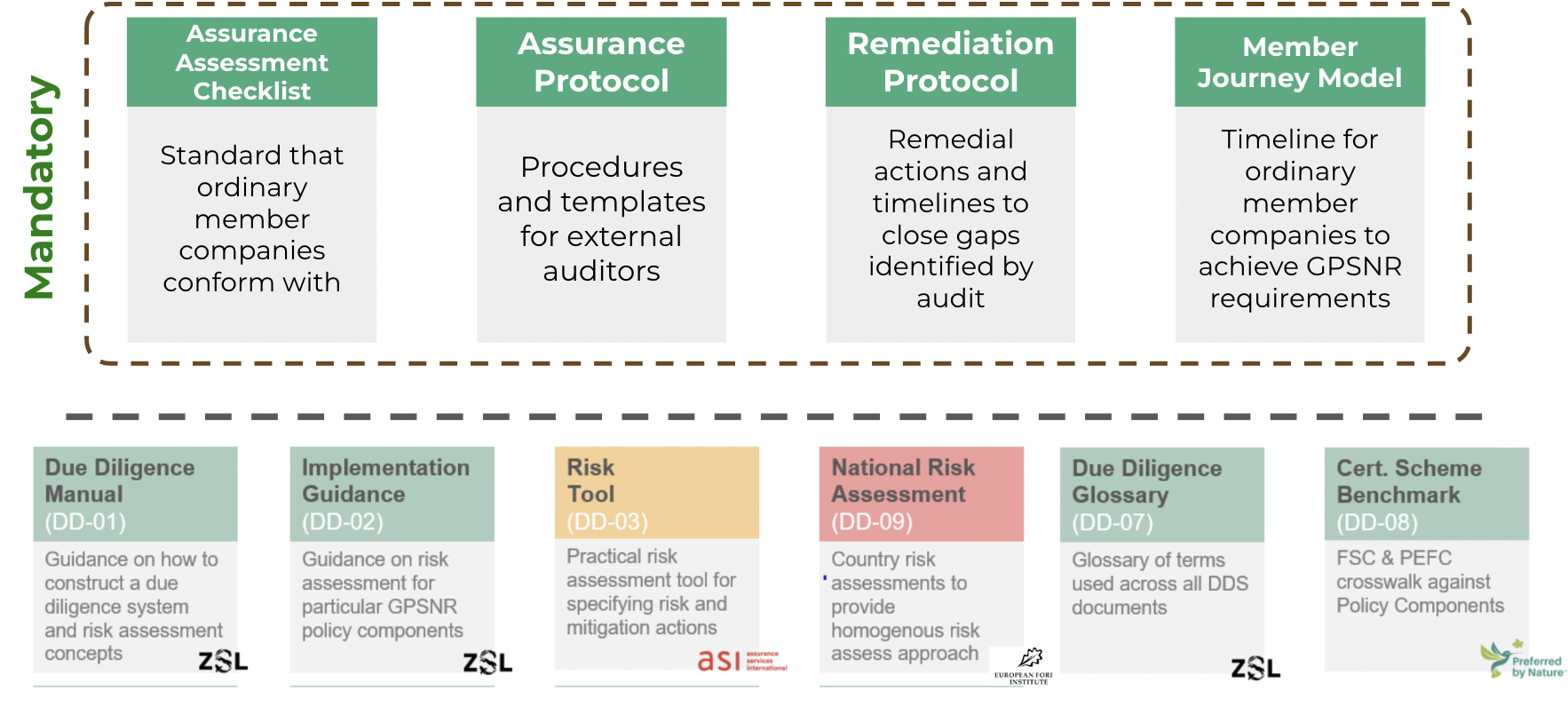
For the strategy and objectives working group, the development of the assurance model will be on priority for the next few months. To this end, they have finalised the draft terms of reference for an Assurance Model taskforce, which will be presented to the Executive Committee in their next meeting. Once approved, recruitment will begin extensively. The risk subgroup is also finalizing a document to be shared with the Executive Committee for their feedback.

Smallholder Representation Working Group

The group has submitted a resolution ahead of the July 22 General Assembly to restructure smallholder membership within GPSNR to enhance active participation. You can take a look at it in the GA Booklet here. In the next few months, they will begin planning smallholder workshops in Malaysia while also working on the smallholder policy equivalent. In case you missed it, they have also published an RFP recently to pilot agroforestry workshops for smallholders. Find it here. Preparations for a workshop for smallholders in Malaysia have also begun, which would be held in Q3 of 2022.

Policy Toolbox Working Group

In the last month, the group has finalised two major resolutions presented to the July General Assembly – one on the implementation guidance and the other on the disclosure requirements for year one reporting. Take a look here. Additionally, they have also finalised the guidance and templates for reporting for manufacturers and end users. If you are an end user or manufacturer who has not yet received the guidance and/or the templates, please write to the secretariat at info@gpsnr.org. 

For the next couple of months, the working group will be busy with finalising the operational guidance for the compliance panel and will continue conversations on the transparent reporting roadmap for years 2 and 3.

Capacity Building Working Group

After the kick-off of the GAPs coaching project in Indonesia with SNV and Koltiva, the group is  busy in the development of GPSNR’s knowledge sharing platform, which includes smallholder interviews, compiling and assessing responses of member surveys and holding focus group discussions. At the same time, they are working on advancing Capacity Building plans for Indonesia, Thailand and Côte d’Ivoire. 

They have also published two key RFPs for capacity building projects in Indonesia: one on disease fighting and the other on the provision of certified planting materials.

Shared Responsibility Working Group

The Shared Responsibility working group has prepared the Shared Responsibility framework resolution ahead of the GA, which you can read here. 
More To Explore

Members

GPSNR Grievance Mechanism: Call for Comments (Members Version)

During the September 2020 General Assembly, GPSNR members voted to allow the Executive Committee to move forward with designing and implementing a Grievance Mechanism, as outlined in a revision to the statutes. The GPSNR Grievance Mechanism is a non-legal system established for stakeholders to express concerns they have about a GPSNR member or the GPSNR Secretariat and find optimal ways to resolve disputes. This Mechanism is distinct from the Grievance Mechanisms that ordinary company members are required to establish and maintain, and should be used in the event that the company’s mechanism has not successfully resolved the complaints raised. 

Full details of the proposed GPSNR Grievance Mechanism and a list of related Frequently Asked Questions can be downloaded at the following links:

Proposed Grievance Mechanism Process

Grievance Mechanism FAQ

Membership Survey

GPSNR members are invited to comment on the proposed Grievance Mechanism by providing their responses via a survey. The survey will be open until 29 January 2021, after which the results will be compiled and reviewed.

Click here to submit your comments on the proposed Grievance Mechanism

Members Webinar

There will be an informational webinar on 14 January 2021 at 8pm (Singapore time) during which the members developing the Grievance Mechanism will share more details about the mechanism and conduct a Q&A session.

Click here to register for the webinar.

News

GPSNR’s new Policy Framework drives members commitment to sustainable rubber production and sourcing

Singapore, 23 September 2020: On Wednesday, members of the Global Platform for Sustainable Natural Rubber (GPSNR) convened the annual General Assembly, which saw the approval of a members’ sustainability policy framework and the creation of a new membership category for smallholder producers of natural rubber.

The newly approved policy framework will help GPSNR member companies, who account for almost 50% of global natural rubber volume, to establish or update strong supply chain sustainability commitments through their natural rubber purchasing policies, on all aspects of sustainability: economic, environmental, and social. Modeled around the Platform’s 12 Principles of Sustainable Natural Rubber, the new policy framework sets out eight overarching themes that include commitments to legal compliance, community livelihoods, healthy, functioning ecosystems (including no deforestation), and respecting all human rights.

“This is a tremendous milestone for the Platform and for the natural rubber industry. In just under two years, GPSNR members developed and approved concrete policy commitments for companies to integrate into their sustainable natural rubber policies. Today, and despite the challenges we all faced during this global pandemic, GPSNR members send a signal to the world about their commitment to achieving a fair, equitable and environmentally sound future” said GPSNR Director Stefano Savi.

Around 85% of the world’s natural rubber is produced by smallholders. In order to transform a sector that is primarily reliant on smallholder producers, GPSNR is embracing smallholder inclusivity and a concept of shared responsibility through the establishment of a Shared Responsibility Working Group, which will identify how the responsibilities and costs of implementation can be equitably distributed across all stakeholder categories, with the understanding that smallholders should not carry the burden of a higher cost to implement sustainability activities in complying with the policy or implementation guidance to be developed.

“Smallholders are a crucial link in the natural rubber value chain, and they have a key role to play in driving awareness on-the-ground and setting the global agenda for sustainable natural rubber” remarked Director Savi.

This year, GPSNR welcomed 28 smallholder members from seven rubber-producing countries. These smallholders now constitute a newly approved standalone category and play an equal role in decision-making within GPSNR alongside the other four categories: producers, processors, and traders; tire manufacturers and other natural rubber makers/buyers; car manufacturers, other downstream users and financial institutions; and civil society.

GPSNR’s virtual General Assembly drew more than 120 attendees, including members of the Platform, partners and invited guests. In addition to voting on resolutions, GPSNR members also elected representatives to the 2020-2021 Executive Committee, which comprises representatives from each of the membership categories. And for the first time, three newly elected smallholder producers with diverse geographical backgrounds will participate in Executive Committee discussions and decision-making.

Translate »
Scroll to Top