

Strategy and Objectives Working Group Update – February 2020

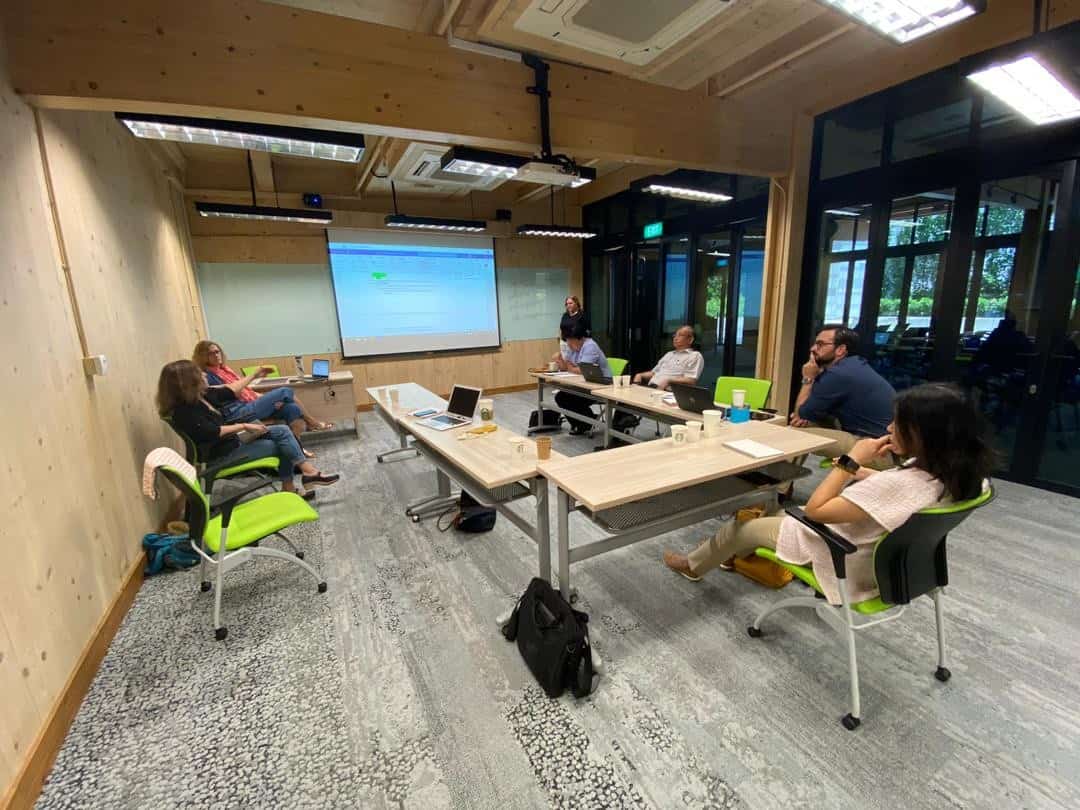
Working on the policy components during the Policy Toolbox drafters group meeting in Singapore.

Share This Post

The Terms of Reference (ToR) for the Equity sub-Working Group are now finalized. The group is currently recruiting members to start work on developing a shared definition of equity and  assessing the current level of equity (or lack thereof) across the natural rubber supply chain, with the help of studies on Living Wage and Living Income, which will then inform recommendations on what can be done to promote equity along the supply chain. Members should ideally belong to the Strategy & Objectives Working Group. Any other GPSNR members who are keen to participate and possess relevant expertise may indicate, for consideration, their interest by sending an email to GPSNR Impact and Assurance Manager, Kobrat Sawasdivorn (kobrat@gpsnr.org) for consideration by the Chairs of the group, James Laimos and Martin Hollands.

Following a review of the proposals received, consultancy group James Griffiths & Associates Sàrl has been selected to commence the study on Human Rights and Labour Rights’ risk mapping in the global natural rubber value chain. The study aims to improve GPSNR’s understanding of the social risks across key natural rubber production and processing countries, to propose risk mitigation strategies for each region, and to identify relevant social sector stakeholder groups that can contribute through active membership in GPSNR. A survey has been designed for Strategy & Objectives Working Group members to set the scope of the study by defining geographic coverage, identifying current perceived social risks, and contributing key perspectives and reference materials.

‘Policy Toolbox’ Working Group

The drafters held a two-day physical meeting in Singapore over 13 and 14 February to finetune the policy components and baseline reporting requirements, with input from GPSNR members representing the processing and tire-making segments of the industry. The productive session saw open sharing from all participants, which provided insights into the processes and considerations of each sector and informed the discussion on the details of the policy components. The meeting participants also examined the assurance model and how it interfaces with policy development, as well as the support systems necessary to collect and share data securely. The meeting also saw the creation of a roadmap which lays out revised timelines and a work plan for the Working Group in its second year. Moving forward, these documents will be shared with the rest of the Policy Toolbox Working Group before being presented to the larger Strategy & Objectives Group.

‘Capacity Building’ Working Group

Members have started approaching the previously identified stakeholders in various rubber-producing countries to better understand the different challenges faced in promoting sustainability in natural rubber production, capacity building activities that have been conducted, and the degree of success (or lack thereof) of such activities, as well as how they can be improved upon. The Working Group has already received some responses from stakeholders in Brazil, Indonesia, Myanmar and Thailand. Aggregated data from these interviews will then be presented to the Executive Committee. The insights gleaned from these interviews will go towards the development of a capacity building action plan, which will undergo several rounds of consultation with members, smallholders, donors and potential local partners.

‘Traceability and Transparency’ Working Group

The Working Group has developed Request for Proposals for two pilots. One pilot for a project that employs satellite mapping tools and a second pilot for a comparison study of three traceability tools.

The project aims to enhance and improve current High Conservation Value (HCV) and High Carbon Stock (HCS) mapping in areas where rubber is predominantly produced. The focus will be on a combination of tools that use remote sensing, satellite imagery and machine learning to map areas of potential deforestation and other identified risks. The Working Group will liaise with the Policy Toolbox Working Group to ensure alignment with GPSNR’s member requirements, which are currently being developed.

The three traceability tools that the comparison study will focus on are: supply chain tracking, supply chain mapping and artificial intelligence (satellite and remote sensing). The study will assess each tool’s methodology for identifying origin and collecting information, with the aim to make a suitable recommendation based on the Working Group’s specified criteria.

More To Explore

News

GPSNR unveils first ever collective grievance mechanism in the natural rubber industry

Singapore, 15 June 2021: The Global Platform for Sustainable Natural Rubber (GPSNR) has unveiled the natural rubber industry’s first ever grievance mechanism. The process provides a platform to address complaints against its members. It also creates a space for collaboration, improved relations and amicable and meaningful solutions amongst stakeholders in the natural rubber value chain. In situations where this is not possible, the Grievance Mechanism offers recourse and seeks to ensure remedy is provided to impacted parties.  

Members and non-members can now use this process to address existing concerns regarding a member’s violation of membership requirements or other guiding principles of the Platform. The mechanism seeks to provide transparency and predictability in the process and requires resolutions to be reached in a timely manner. It asserts particular emphasis on finding expedient and impartial resolution for high risk cases involving impact on communities or the environment, through the creation of a Complaints Panel. This panel will be made up of volunteer members, an external expert, and will judge whether and what kind of corrective actions need to be taken. 

The process is comprehensive and risk-based, and is designed with the aim  to bring parties to viable solutions and concrete remedy through a transparent process. ‘’The mechanism makes it possible for third parties to address issues with GPSNR members through an unbiased yet amicable process. The focus of the process will always be on finding solutions that work for everyone and provide both Complainants and Respondents with a transparent platform for resolution and accountability’’ said GPSNR Platform Director Stefano Savi.  

In slightly over two years, GPSNR has established itself as a platform working towards systemic change in the natural rubber supply chain. The existence of a strong redressal process like this grievance mechanism showcases its commitment to a culture of fairness and transparency.  

-Ends-  

About GPSNR:  

GPSNR is an international membership driven platform set up to define sustainability for the natural rubber value chain. It brings together various stakeholders to a common ground based on fairness, equity and environmental sustainability. GPSNR member companies account for almost 50% of the global natural rubber volume.  

More on sustainablenaturalrubber.org 

For more information, please contact: 

Bani Bains 

Communications Manager 

Email: bani.bains@gpsnr.org 

Ph: +65 97268165 

News

GPSNR Working Groups Update: May 2024

Strategy and Objectives Working Group: Feedback on the Assurance Model resolution has closed, and the finalised resolution has been released along with other voting materials. Public consultation on the documents up for discussion can be found here. Members will vote on the Assurance Model resolution at the Extraordinary General Assembly and are encouraged to participate in the in-person meetings to provide input on the Assurance Model content.

Smallholders Representation and Capacity Building (SCB) Working Group: The SCB Working Group meetings in April provided updates on the Thailand Agroforestry, Thailand GAP, and Indonesia GAP projects. The final workshop for the Income Diversification and Rubber Agroforestry Taskforce in Liberia was completed. Calls for capacity-building project proposals and funding were issued and interested members are welcome to contact cheewei@gpsnr.org.

The SCB WG will continue maintaining oversight of all ongoing projects. The Pre-EGA Smallholder Webinar will run from 8 PM to 10 PM SGT on 30 May 2024. The final report for Indonesia GAP (Phase 1) and the mid-term report for the Digital Knowledge Sharing Platform are in progress and will be distributed by the Secretariat once received. The Digital Knowledge Sharing Platform Task Force will meet with the project partner, Koltiva, for remediation planning and technical review meetings. The Income Diversification and Rubber Agroforestry Taskforce will finalise their reports and prepare for the final presentation.

Shared Responsibility Working Group: The Value Transfer Group has held subsequent meetings to discuss the value transfer proposal. The group continues to meet to refine the proposal, which will be presented at the in-person meetings in June.

Translate »
Scroll to Top