
Press Release: GPSNR General Assembly 2022

Share This Post

PRESS RELEASE


Global Rubber Industry kickstarts a plan for equitable distribution of costs and benefits of sustainability in their supply chain


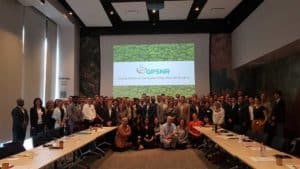
Singapore, 14 July 2022: Members of the Global Platform for Sustainable Natural Rubber (GPSNR), who represent 55% of the rubber value chain, convened their annual General Assembly yesterday, where they defined and charted out a path for a concept they call shared responsibility. This concept acknowledges the lack of equity in the natural rubber supply chain and charts out a mechanism where the costs and benefits of the platform’s sustainability initiatives will be equitably distributed across all actors within the supply chain.


To this end, GPSNR members passed a resolution that binds them to a shared responsibility framework with 3 pillars – Shared Investments, Value Transfer & Target setting, and Knowledge & Data sharing – which will help share the costs and benefits across all actors in the value chain. Each stakeholder group has a different role to play to contribute to a sustainable natural rubber sector and within the three pillars. By the third quarter of 2023, each of the three pillars will be in the testing, implementation or pilot stage of their specific goals.


According to GPSNR director Stefano Savi, “Systemic change does not happen overnight. While we have been putting together pillars on the sustainability side of our vision, this is our first pillar that also requires commitment to an equitable supply chain. With this shared responsibility framework, parties from across the natural rubber value chain are agreeing to take accountability for sustainability in an equitable and fair manner. As we work to translate this to actionable outcomes, I hope more stakeholders will join us, and existing ones will be inspired to accelerate the process of changing our supply chain.’’


In addition to voting on resolutions like the shared responsibility framework, GPSNR members also voted in a guidance for implementation of the policy framework that they all abide by, which includes some stringent commitments on deforestation and human rights. They also voted on some procedural resolutions on their statutes and elected representatives to the 2022-2023 Executive Committee, which comprises representatives from each of the membership categories.

Access the Shared Responsibility Framework here.

END

About GPSNR: 

GPSNR is an international membership driven platform set up to define sustainability for the natural rubber value chain. It brings together various stakeholders to a common ground based on fairness, equity and environmental sustainability. More on sustainablenaturalrubber.org

For more information, please contact:

Bani Bains

Communications Manager

Email: bani.bains@gpsnr.org

Ph: +65 97268165
 

More To Explore

News

GPSNR Working Groups Update: June 2023

Strategy and Objectives Working Group: 

The Traceability pilot field trials for the Risk Subgroup, led by consortiums Agridence and Koltiva, are now in full swing. Agridence provided a midpoint update during the June Hybrid meetings, highlighting their progress thus far.

Looking ahead, the Risk Subgroup is actively strategizing the next steps for ASI’s deliverable on the Risk Assessment Framework. This includes conducting internal piloting and aligning the tool with GPSNR commissioned studies to identify any potential gaps.

In an effort to standardize country levels within the tool, the Risk Subgroup will be issuing a Request for Proposal (RFP) to engage consultants who can contribute their expertise. Furthermore, the Risk Subgroup is in the preliminary stages of discussions with the Basel Institution, exploring a potential collaboration to address corruption risks in the supply chain. 

The Assurance Model Task force will convene to receive updates on the alignment of Key Performance Indicators (KPIs) and the due diligence system, ensuring that progress is being made and objectives are being met. In order to create an Assurance Manual under the Members Progress Model, an RFP will be crafted and sent to consultants. This step aims to gather the necessary input and expertise to develop a comprehensive manual.


Smallholders Representation and Capacity Building (SCB) Working Group: 

The Smallholders Policy-Equivalent (SPE) Taskforce has successfully presented the final recommendations to the SCB WG, marking a significant milestone in their work. They are actively working towards obtaining endorsement from the SCB WG for their final recommendations as outlined in the report.

The HCSA-HCVN Field Trials have reached an important stage, with the preliminary final report being submitted for review and assessment. The HCSA-HCVN will soon submit the final report, marking the completion of this endeavor.

In an effort to promote knowledge sharing, the digital Knowledge Sharing Platform (KSP) Taskforce organised a meeting on 24th May 2023 for SCB WG members. The objective was to facilitate a better understanding of the KSP, and the service provider has already begun developing new features for the platform.

The Indonesia National Subgroup has taken the initiative to prepare quarterly progress reports for the GAP Coaching and Disease Fighting projects, providing updates to the SCB WG.

Meanwhile, the Thailand National Subgroup is currently in the process of evaluating proposals received for the Thailand GAP Coaching project. The deadline for proposal submissions is 30th June 2023.

The Agroforestry-Income Diversification Taskforce is working to finalize the schedule of workshops planned for 2023-2024.

Lastly, the SCB WG will continue to oversee all ongoing projects.


Policy Toolbox Working Group: 

In order to enhance the reporting process, input has been collected from members through a survey and stakeholder-specific meetings as part of the Year 1 Reporting Review process. The feedback received will play a crucial role in informing revisions to the Reporting Matrix and disclosure requirements for Years 2 and 3, as outlined in the Transparent Reporting Roadmap (TRR). Furthermore, discussions are underway to reach an agreement on the TRR for Year 2 reporting, with the Working Group currently finalizing updates received from the OEMs. To reflect the proposed changes to the reporting matrix, the Reporting Guidance will be updated accordingly, providing clear and comprehensive guidelines for reporting.

The Working Group has carefully selected consultant Petra Westerlaan to propose a quantitative orientation for the reporting matrix. This includes conducting a crosswalk analysis with other established reporting frameworks such as CDP Forest, GRI, and ZSL-SPOTT. The integration of quantification will not only facilitate data aggregation but also simplify the evaluation of annual progress. The consultant’s proposed revisions to the reporting framework will be evaluated and decided upon, and recommendations will be made to improve the reporting process and timelines.

In parallel, the Compliance Panel Terms of Reference (TOR) and operational guidance are being finalized based on the Assurance Model, ensuring a robust framework for ensuring compliance and accountability.


Shared Responsibility Working Group: 

During the face-to-face meeting, the Governance and Guiding principles were presented, highlighting their importance in shaping the future direction of GPSNR. Manufacturers are now required to seek internal approval regarding the Governance Framework and subsequently provide a final version for approval to the GPSNR Executive Committee (EC) and General Assembly.

The SR WG is actively engaged in defining an inclusive shared investment framework, encompassing various forms of contribution such as in-kind support, financial contributions, and external funding. The outcomes of discussions at the Manufacturers category level will play a crucial role in shaping this framework.

Collaborating with the Secretariat and other WGs, the SR WG is committed to revamping discussions on data sharing and value transfer, recognizing their significance in achieving our objectives. These discussions will seek to optimize the sharing of data and the value derived from it.

To provide clarity and transparency, the WG aims to define the value and benefits associated with each category within GPSNR, ensuring that all stakeholders are aware of the advantages and opportunities available.

Furthermore, the WG, in collaboration with the Capacity Building WG, is working on developing a protocol to filter and evaluate proposals based on the Equity definition and the stakeholders identified by the EC. This process will ensure fair and comprehensive evaluation of proposals.

Lastly, an open co-chair position is available, and volunteers are welcomed to contribute their expertise and leadership to drive the WG forward. If you are interested in taking on this role, please step forward and join us in this important endeavor.

By establishing effective governance, inclusive investment frameworks, and clear protocols, we are working towards a sustainable and equitable future for the natural rubber industry. Your participation and engagement are vital to our collective success.

News

Smallholders Representation Working Group Update – December 2019

The Smallholders Representation Working Group has agreed to propose the new main characteristics for potential representatives of GPSNR smallholders as below:

Smallholder: individual natural rubber farmers with all following characteristics:

  • The primary source of income for the smallholder is the farm (not only Natural Rubber); 
  • The Natural Rubber production unit size is less than 50ha (although the farm may be larger);
  • Profits from the farm accrue primarily to the owner of the farm and their family.

The new definition combines the qualitative and quantitative aspects with the intention to offer a pragmatic and standardized definition. The working group members understand that average farm size differs from country to country, hence having a universal threshold in farm size might not guarantee that the farmer is a small grower in that particular country. However, a quantitative indicator should be in place in order to give an objective and clear understanding to all audiences. The threshold of 50 hectares is established as an interim quantitative indicator based on the discussion in the working group that more than 80% of natural rubber supply comes from the farm which is smaller than 50 hectares.

The Country Champion is collecting application form from the smallholders that have been nominated durinng GPSNR Smallholder Workshop.  While membership fee is waived to smallholder member, funding to participate the General Assembly in March 2020 in Singapore is limited to 20 seats. The Working Group will further look at the profile of the smallholders  to design the criteria for funding mechanism.

Translate »
Scroll to Top