
Smallholders Representation Working Group Update – October 2019

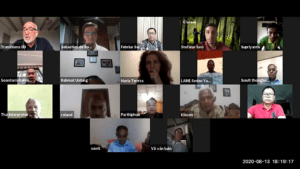
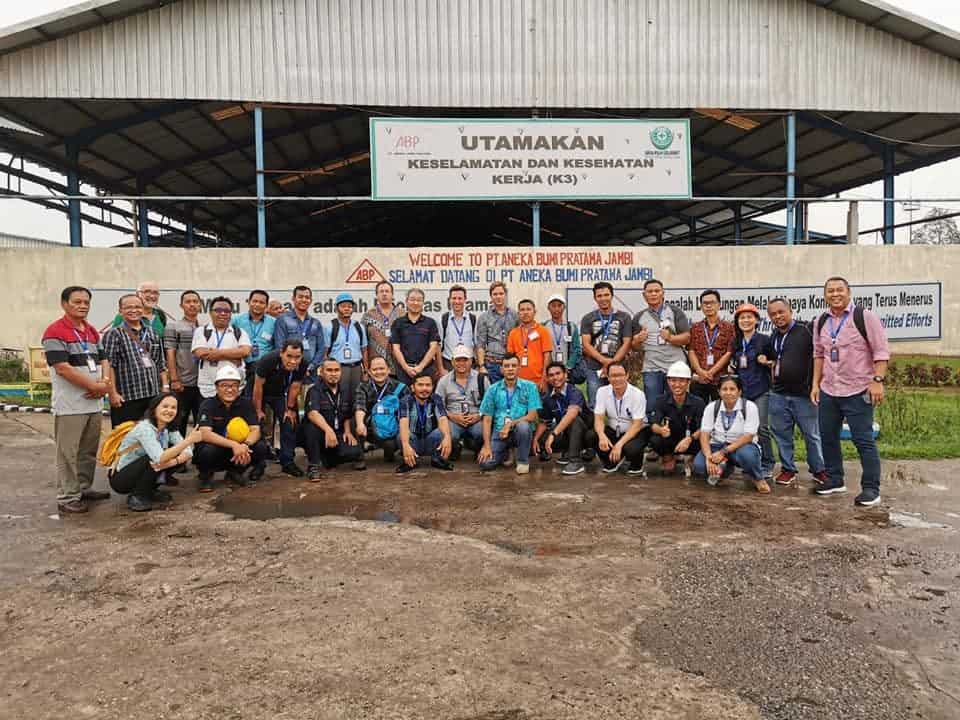
Two workshops have been successfully held. More than 20 rubber smallholders from all over Indonesia - Kalimantan, South Sumatra, West Sumatra and Jambi gathered during the workshop in October 7th - 9th. The workshop in Thailand just finished with a fruitful discussion on collaboration opportunities between rubber smallholders and GPSNR.

Share This Post

Several challenges of sustainable natural rubber production were brought up and discussed among rubber farmers and GPSNR members, but front and foremost was the issue of livelihoods and future of labour. After the field visit and 3 days workshop, the rubber farmers both in Indonesia and Thailand agreed that to solve such issues, smallholders should be put at the center of the solution.  They agreed that including smallholders’ representatives in the new governance model is the way forward to achieve this.  As for the criteria of the organizations, apart from having a personnel with extensive knowledge around rubber from cultivation, transportation to processing, the farmers also said that it is important that any representing organization should have a democratic governance. The smallholders also pointed out to a few farmers from different regions that could directly represent smallholders in GPSNR.  A few organization names were also proposed which will then be followed up by Smallholders representation working group to ensure active engagement for further collaboration.

“I am happy to hear that the downstream of natural rubber users like tire makers wish to establish a direct relationship with the upstream natural rubber producers like us. Personally I believe that sustainable supply chain will work only when every actor in the chain work together to find potential solutions together.” said one rubber smallholder in Thailand. Smallholders also emphasised on the importance for engagement to be long term if results are to be achieved.

The dates for the last 3 smallholder workshops have been confirmed and will be held in Brazil (20 – 21 Nov), Cote d’Ivoire (26 – 28 Nov) and Vietnam (16 – 18 Dec) respectively. The aim of the workshops is to gain a better understanding of smallholders, how smallholders can be meaningfully represented within GPSNR and to further explore the future of sustainable natural rubber production from a smallholders perspective at local level.

We will keep you posted on our progress in our upcoming newsletters. Stay tuned !
More To Explore

News

GPSNR Working Groups Update: February 2022

All GPSNR working groups have a large chunk of work ahead of them. Here are all their updates: 

Strategy and Objectives Working Group

After completing the intensive task of publishing the Theory of Change, the strategy and objectives group is working on developing its own next steps based on this Theory of Change. In the same spirit, the group has also updated its own Terms of Reference and membership. It is now focused on developing the RFP for the Economic Risk Study, which will be published soon. Currently, they are developing GPSNR’s approach to managing and evaluating risk (commonly known as the risk-based approach in meetings!). 

Smallholder Representation Working Group

Apart from initiating outreach to smallholders with a view to organise onboarding workshops in countries such as Liberia, Ghana, Malaysia and Colombia, the group is focussed on its newly formed task force to develop the GPSNR Smallholders Policy Framework. The first meeting of this task force will be in March 2022. The group is also preparing for the first Smallholders International Call of the year in March 2022.

Policy Toolbox Working Group

This group has already recruited new members for three of its subgroups: Transparent reporting roadmap, Implementation Guidance and RR Guidance & Tools. In the coming months, they will be developing guidance for the reporting requirements and a transparency reporting roadmap before the reporting cycle begins in the middle of 2022. 

At the same time, the group continues to refine a major part of the assurance model: the Implementation Guidance, which it aims to have ready before the General Assembly of 2022. Additionally, this group is busy finalising the compliance panel’s operational guidance.

Capacity Building Working Group

As we begin a year of implementation in Thailand, this group is working on reviewing and finalising strategy and approach for Capacity Building in Thailand, including the integration with Agroforestry Task Force workstream based on discussions with the Rubber Authority of Thailand on 24 February 2022.

The working group is also continuing to develop and implement capacity building plans for Indonesia and Ivory Coast, and will soon appoint service providers for GAP Coaching in Indonesia

Traceability and Transparency Working Group

Having received members’ input on the traceability guidance, representatives from the working group are now finalizing the benchmark based on the feedback.

Shared Responsibility Working Group

The Shared Responsibility working group has completed the first draft of the Shared Responsibility (SR) framework, and has presented the same to the Executive Committee. The consultant is now working on incorporating feedback from the Executive Committee into this draft.

News

Member Consultation on proposed GPSNR Policy Components and Baseline Reporting Requirements

Natural rubber faces a similar set of environmental, social and economic issues as other agricultural commodities such as palm oil, but the spotlight on sustainability has only been recently turned towards this key raw material, 70% of which goes into tire production. The launch of GPSNR marked a significant step towards developing sustainable standards for natural rubber, with member organizations making a commitment to 12 Sustainable Natural Rubber Principles. 

The Policy Toolbox Working Group was established to develop a guiding framework for GPSNR members to implement policies and practices that align with the 12 Principles. Two key documents, the Policy Components and Baseline Reporting Requirements, have emerged after a year of discussion and drafting. 

The Policy Components outline specific commitments that GPSNR company members should include in their sustainable natural rubber policies, while the  Baseline Reporting Requirements indicate qualitative and quantitative sustainability data to be reported to the Secretariat for the first year of reporting.

A members webinar was held on 16 June, where the Co-Chairs of the Policy Toolbox Working Group explained the purpose, process and next steps surrounding the two documents. 

Several members have volunteered to participate in an ongoing pilot testing of the Baseline Reporting Requirements. The goal of the pilot is to refine and finalize the Baseline Reporting Requirements based on company feedback.

The proposed Policy Components and Baseline Reporting Requirements are now open for member consultation until 3 July 2020.

Scroll to Top