
GPSNR Working Groups Update: July 2021

Share This Post

As every month seems to be busier than the last, these monthly updates encapsulate all the details that are important for members to know. Here is the snapshot for the month of July 2021:

Strategy and Objectives Working Group

After a busy few months of putting together the Environmental Risk Study and the Theory of Change, this group is preparing to present these two important pieces of work to the rest of the membership before publishing them on public domains.

While the Environmental Risk Study webinar is scheduled for 29 July, the Theory of Change is still being finalised and will be worked on through a workshop planned for September or October.

The group is also continuing to work on refining the platform external partnerships approval process. 

Smallholder Representation Working Group

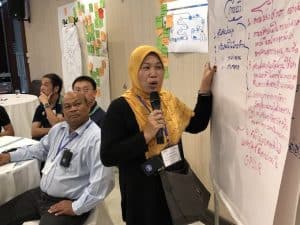
After an onboarding workshop for Indonesian smallholders this month, the group is planning its next onboarding for Sri Lankan smallholders in September. While COVID-19 has caused a delay in similar workshops for Cambodia and India, the group has begun planning outreach for Liberia and Malaysia and Colombia. 

They are also developing participants lists from workshops to onboard more smallholders from Vietnam, Thailand, Ivory Coast, and Ghana, which already have some amount of representation at GPSNR.

Policy Toolbox Working Group

This working group has completed the initial reviews of two significant aspects of the GPSNR assurance model: the Implementation Guidance and the Reporting Requirements. The WG will also embark on a review of the Compliance Panel Guidance in August. As they take each of these bodies of work forward in the next few months, please reach out to the secretariat for any questions around these documents and how they impact your work. 

Capacity Building Working Group

The group rolled out a call for funding from all rubber industry players (both GPSNR members and non-members) for capacity building work in Indonesia, Thailand and Ivory Coast, while also finalising BMZ funding for projects in Indonesia and Ivory Coast in 2021-22. 

In the next month or so, the group is working on identifying suitable locations for capacity building programmes in Indonesia across five key rubber-producing regions, and advancing implementation plans for Ivory Coast.

They are also finalising Good Agricultural Practices, developing systems for monitoring and evaluating capacity building activities and putting mechanisms in place to ensure national implementation subgroups remain aligned with GPSNR.

Traceability and Transparency Working Group

This working group is currently finalising the definition and acceptable levels of traceability for GPSNR and developing data collection and reporting standards together with the Policy Toolbox working group.

Shared Responsibility Working Group

The group is drafting activities and framework for Shared Responsibility for integration into other processes such as the Implementation Guidance. 
More To Explore

News

Secretariat Update – August 2019

The signing of the MoU took place at IRSG’s Office in Singapore, on the 6 August 2019 by Mr Salvatore Pinizzotto, IRSG Secretary General and Mr Stefano Savi, GPSNR Director. The MoU will have the aim of consolidating, developing and detailing the cooperation between the two organisations. It will also contribute to the effectiveness to achieve the organisations’ common objectives in the field of sustainable production and consumption of natural rubber.

The cooperation will have a focus on Sustainability in the Natural Rubber Value Chain, particularly in relation to socio-economic and environmental aspects linked to the natural rubber sustainable production and consumption. Immediate opportunities for collaboration have been identified in the following areas: 

  1. Definition of Natural Rubber Sustainability and identification of appropriate standards, building on the activity carried out from IRSG in the SNR-i project.
  2. Natural Rubber Sustainability and socio-economic impacts on smallholders in producing countries.
  3. Land tenure right and sustainable income of smallholders in producing countries.
  4. Impact of climate change in rubber plantations and mitigation of risks.

The International Rubber Study Group (IRSG) was established in 1944 and is the only intergovernmental organization that brings the world’s rubber producing and consuming stakeholders together. The IRSG is the forum for the discussion of matters affecting the supply and demand for natural as well as synthetic rubber. IRSG is at the forefront in conducting activities and research on the sustainability of the natural rubber economy. IRSG has 36 member Governments and more than 700 industry members covering the whole natural rubber value chain.

The Global Platform for Sustainable Natural Rubber (GPSNR) is an international, multistakeholder, voluntary membership organization, with a mission to lead improvements in the socioeconomic and environmental performance of the natural rubber value chain. Development of the GPSNR was initiated by the CEOs of the World Business Council for Sustainable Development (WBCSD) Tire Industry Project (TIP) in November 2017. Currently the Platform has 51 Members including Producers, Processors & Traders, Tire makers and other rubber makers/buyers, Carmakers, other downstream users and Financial Institutions, and Civil society.

Representatives from each of these stakeholder groups have contributed to the development of the Singapore-based platform and the wide-reaching set of priorities that will define GPSNR strategy and objectives.

News

Continuing the Conversation with GPSNR Topic Talks – The Sumatran Rubber Pilot

The GPSNR Topic Talks webinar series is organised by the GPSNR Secretariat and presented by GPSNR members. The webinars cover several themes around sustainability and the global natural rubber supply chain.

The Topic Talks series continued on the 17th of March with Dr. Michael Steuwe from WWF US and Gerald Tan from HeveaConnect presenting on the Sumatran Rubber Pilot.

The Sumatran Rubber Pilot (SRP) is a voluntary, self-financed collaboration of rubber supply chain players and technical experts interested to facilitate the production and trade of transparent and sustainable natural rubber. The participating processing mills, tire makers, civil society organisations, technology providers and financial institutions have three major objectives:

  • Demonstrate how rubber’s downstream can work together to make its upstream more sustainable.
  • Identify, test, evaluate, and report on what it takes to achieve, and how to pay for transparent sustainable natural rubber supply chains.
  • Develop “Proof of Concept” approaches from and for GPSNR discussions on policy requirements and implementation, transparency and traceability, capacity building, and shared responsibility.

Within a few months of the project launch in July 2020, SRP’s four rubber processing factories, managed by the Halcyon Agri and ITOCHU groups, had traced up to 1 year of rubber supplies to the village and/or sub-district of origin based on self-declarations by their supplying dealers. These approximate origins of the rubber sources were filtered through WWF Indonesia’s new environmental risk assessment and management tool which identifies High Conservation Value Areas and High Carbon Stock Forest for the whole island of Sumatra. The results allow processors and their respective downstream supply chains to focus their sustainability work with farmers on priority areas.

The SRP partners are enhancing dealer self-declarations with digital apps such as CropIn and Hamurni to assess farms’ potential environmental, social, equity, labour and legal issues accurately and to address them.

As GPSNR adopts principles and criteria for what constitutes transparent and sustainable rubber, the risk assessment algorithms will be adapted to flag compliant rubber accordingly. This is increasingly important for rubber’s downstream as companies’ Environmental, Social, Governance (ESG) impacts are becoming key evaluation criteria for investors and financiers who will demand the disclosure of the relevant information. In a parallel development, new supply chain laws will require major companies like the world’s car and tire makers to be responsible for the environmental and social impacts of their supply chains. The collection and analysis of detailed data on upstream supply chains will have to become an essential part of doing business and SRP partners are working to respond appropriately to these changes.

While continuing to focus on increasing the resolution of tracing rubber to its origin and collecting the respective data, SRP will now begin finding ways to best address the social, equity, labour, and legal issues that may have come up in supply chain assessments. 

The SRP is a voluntary, open and flexible platform of like minded partners interested in testing a diversity of approaches to achieve supply chain transparency and sustainability, and welcomes interested rubber supply chain actors to reach out and discuss how they might join the collaboration. GPSNR members interested in participating in the SRP should reach out to the GPSNR Secretariat to get involved in the project.

Scroll to Top