13 Global Tire Companies Co-Invest to Deliver Healthcare to 1,800 Rubber Farming Households in Côte d’Ivoire

Groundbreaking GPSNR initiative with social enterprise Elucid targets the overlooked link between farmer health and supply chain resilience

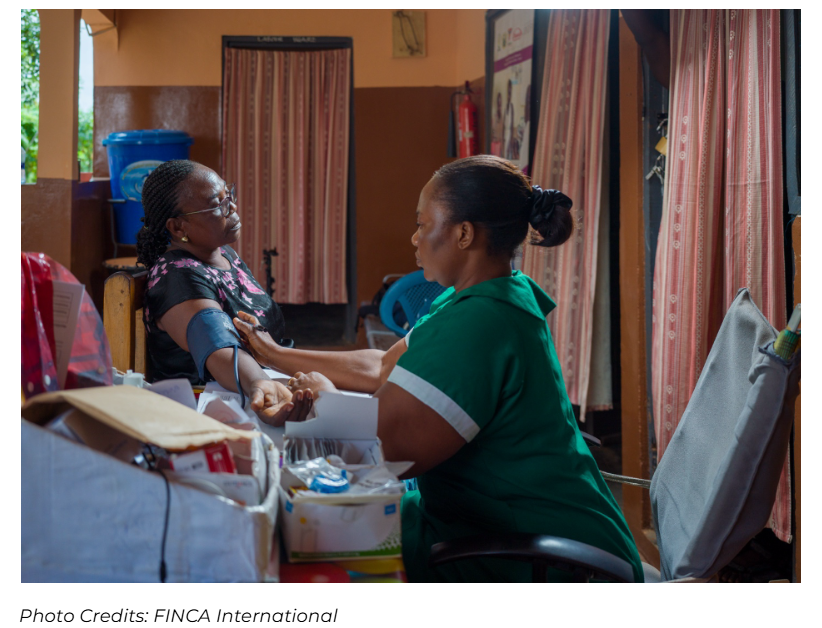
SINGAPORE, 23 April 2026:  The Global Platform for Sustainable Natural Rubber (GPSNR) today announced a three-year partnership with Berlin-based social enterprise Elucid to deliver healthcare access to 1,800 rubber farmers and their households. This will benefit approximately 9,000 individuals  in Côte d’Ivoire. The initiative is funded through GPSNR’s Shared Investment Mechanism (SIM) by 13 tire and rubber companies: Aeolus Tyre Co., Ltd., Apollo Tyres Ltd., Balkrishna Industries Ltd. (BKT), The Goodyear Tire & Rubber Company, Hankook Tire & Technology, Kumho Tire Co., Inc., Maxxis International, Nokian Tyres plc, Prometeon Tyre Group, Sumitomo Riko Company Limited, Sumitomo Rubber Industries, Ltd., Toyo Tire Corporation, and The Yokohama Rubber Co., Ltd.

The partnership addresses a gap the industry has long overlooked: the direct impact of farmer health on supply chain productivity. Medical emergencies cost Côte d’Ivoire an estimated 853 million USD in cocoa exports in 2017 alone. With many farmers cultivating both cocoa and rubber, the implications for the natural rubber sector are significant. Research from Ghana  shows that enrollment of farmer households in national health insurance increases their agricultural investment in several areas by approximately 40%, according to a 2024 study published in Agricultural Finance Review.

“We talk constantly about improving yields and farm management practices, but we’ve missed something fundamental,” said GPSNR CEO Stefano Savi. “A farmer who can’t afford to see a doctor when they’re sick or who cannot go to the farm because their child is unwellcan’t be productive. Healthcare isn’t separate from supply chain resilience. It’s central to it.”

A Critical Gap for the World’s Fourth-Largest Rubber Producer

Côte d’Ivoire is critical to global rubber supply chains, yet smallholder farmers who drive production across the country’s forest regions face severe healthcare barriers. The country ranks 187th out of 195 globally for quality of care, and only 32% of essential medicines are available in the public health sector, according to a 2020 health systems assessment. While two-thirds of the population are enrolled in the national health insurance scheme (CMU) on paper, fewer than 4% actually used their insurance card in 2025, due to administrative hurdles and facility-level barriers.

When farmers lack reliable healthcare, medical emergencies force them to sell assets and abandon farm improvements — a direct risk to the supply chains that depend on them.

A Comprehensive, Four-Part Approach

The initiative combines four components:

  • Enrollment in CMU national insurance for all participating farmers and households
  • Elucid’s emergency and essential care scheme covering WHO-accredited medications and life-saving services
  • Quality improvements at 15 healthcare facilities serving the target communities
  • Community awareness programs connecting health to economic wellbeing

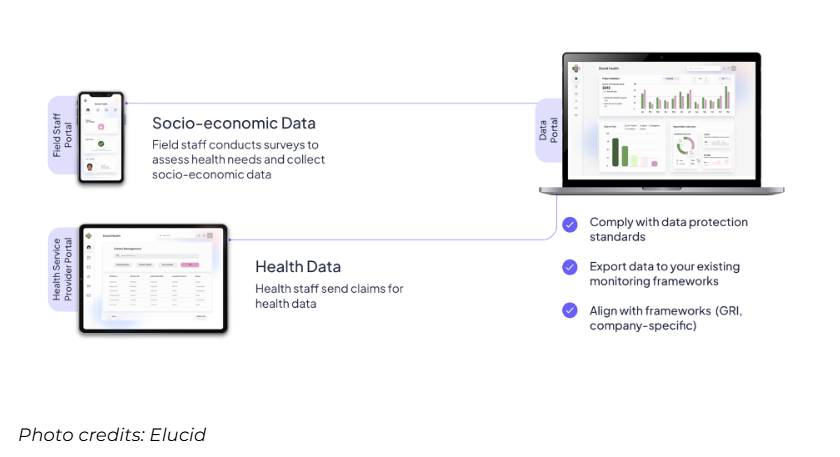
Elucid’s digital platform will track all data in real time, enabling transparent impact reporting throughout the project. The program aims to increase healthcare visits from fewer than 200 to over 1,800, drive CMU enrollment from less than 30% to over 90%, and prevent more than 150 catastrophic health expenditure events each year. Half of beneficiaries will be women and 20% will be children under 18.

“This is about demonstrating what’s possible when the private sector invests in making national health systems work for farmers,” said Sambhavna Biswas, Partnerships Manager at Elucid. “This model can be replicated across rubber-growing regions and adapted to other agricultural sectors. Everyone in the value chain benefits when the people at its foundation are healthy and economically secure.”

Farmer enrollment begins in August 2026, with healthcare access improvements continuing until  January 2029. From December 2027, the project will transition toward long-term sustainability, building cooperative capacity to maintain health support for their members.

About GPSNR: The Global Platform for Sustainable Natural Rubber is a multi-stakeholder initiative bringing together tire manufacturers, vehicle makers, natural rubber processors and traders, and civil society organizations to develop and implement sustainability policies and practices across the natural rubber value chain. More on sustainablenaturalrubber.org

About Elucid: Elucid is a Berlin-based social enterprise providing data-driven healthcare services for farmers and workers in global supply chains across six countries and five agricultural sectors. Learn more at www.elucid.social

Media Contacts: GPSNR: Bani Bains | bani.bains@gpsnr.org;

 Elucid: Sambhavna Biswas | sambhavna.biswas@elucid.de

Read More »

Call for Project Proposals — GPSNR Shared Investment Mechanism 2027 Funding Cycle [Submission Deadline Extended to 25 June 2026)

IMPORTANT UPDATE NOTICE

Submission Deadline Extended to 25 June 2026
Proposals and budget templates must be submitted by 23:59 SGT on 25 June 2026. Late submissions will not be accepted.

Applicant Webinar Materials
GPSNR held an applicant webinar to walk through the SIM 2027 application process, requirements, and assessment criteria on 8 June 2026. If you missed the session or would like a refresher, the materials are available here: Presentation slides & Webinar recording

A few important reminders before you submit:
–  Proposals are assessed against the SIM funding principles, the open market criteria, and overall quality. Please review these carefully to ensure your project is aligned.
–  Proposals must follow the guidance provided in the proposal template, budget template, and FAQ document. Submissions that do not follow this guidance may be rejected, so we encourage you to check your documents against these references before submitting.


The GPSNR Shared Investment Mechanism (SIM) is now accepting project proposals for the 2027 funding cycle.

SIM is a joint funding framework under which GPSNR Ordinary Members (currently mandatory for Manufacturer Members) co-fund sustainability and capacity-building projects across the natural rubber value chain. Through this call, organisations and individuals are invited to submit project proposals that align with the SIM Funding Principles.

This call is open to both GPSNR and non-GPSNR members. Proposals that successfully pass the technical evaluation conducted by the evaluation panel will be included in a list of approved projects. Manufacturer Members will then review this list and decide which projects to fund.

Submission Window21 April – 15 June 2026 (Extended to 25 June 2026) 

Deadline: Proposals and budget templates must be submitted by 23:59 SGT on 15 June 2026 (Extended to 25 June 2026). Late submissions will not be accepted.

Submission Instructions

    1. Download the required documents:
    2. Read the GPSNR Call for Project Proposals FAQ V4.docx  prior to preparing your submission.
    3. Complete both documents and submit them to cheewei@gpsnr.org using the following subject line:
      [SIM 2027 Proposal Submission] – [Your Project Name]

For more information, please contact cheewei@gpsnr.org

Read More »

GPSNR Assurance System – Assessment Service Provider Application

Singapore, 15 December 2025 — Members of the Global Platform for Sustainable Natural Rubber (GPSNR) gathered today for the organisation’s 7th General Assembly, marking a landmark year of progress in collective responsibility, accountability, and member-driven sustainability across the natural rubber value chain.

A major milestone in 2025 was the launch of GPSNR’s risk-based Assurance System, which sets clear sustainability expectations, introduces independent verification, and promotes continuous improvement beyond compliance. Developed collaboratively over several years, the system provides a credible, globally relevant framework for advancing sustainability in the sector. At this GA, End User companies reaffirmed their support and agreed on a structured pathway toward full implementation in their category.

“This year marks a turning point for GPSNR,” said Stefano Savi, CEO of GPSNR. “The Assurance System gives our members a shared and trusted foundation for demonstrating progress across the value chain.”

Members also marked the first year of the Shared Investment Mechanism, an innovative model enabling manufacturers to equitably share the costs of large-scale capacity-building projects, ensuring long-term benefits for upstream actors, particularly smallholders.

“Sustainability cannot be achieved by one part of the value chain alone,” Savi added. “By investing together, our members are enabling more inclusive and impactful outcomes worldwide.”

Looking ahead to 2026, GPSNR will support implementation of the Assurance System through data gathering, member learning, and cross-stakeholder dialogue to ensure the system reflects on-the-ground realities and diverse business models.

The Assembly concluded with renewed commitment from members to advance equitable, resilient, and sustainable natural rubber supply chains.

About GPSNR:

The Global Platform for Sustainable Natural Rubber (GPSNR) is a multi-stakeholder, member-driven initiative working to advance sustainability across the natural rubber value chain.

More at sustainablenaturalrubber.org

Media contact:

Bani Bains, Communications Director
bani.bains@gpsnr.org | +65 9726 8165

Read More »

GPSNR Celebrates a Landmark Year and Strengthens Collective Commitment at 7th General Assembly

Singapore, 15 December 2025 — Members of the Global Platform for Sustainable Natural Rubber (GPSNR) gathered today for the organisation’s 7th General Assembly, marking a landmark year of progress in collective responsibility, accountability, and member-driven sustainability across the natural rubber value chain.

A major milestone in 2025 was the launch of GPSNR’s risk-based Assurance System, which sets clear sustainability expectations, introduces independent verification, and promotes continuous improvement beyond compliance. Developed collaboratively over several years, the system provides a credible, globally relevant framework for advancing sustainability in the sector. At this GA, End User companies reaffirmed their support and agreed on a structured pathway toward full implementation in their category.

“This year marks a turning point for GPSNR,” said Stefano Savi, CEO of GPSNR. “The Assurance System gives our members a shared and trusted foundation for demonstrating progress across the value chain.”

Members also marked the first year of the Shared Investment Mechanism, an innovative model enabling manufacturers to equitably share the costs of large-scale capacity-building projects, ensuring long-term benefits for upstream actors, particularly smallholders.

“Sustainability cannot be achieved by one part of the value chain alone,” Savi added. “By investing together, our members are enabling more inclusive and impactful outcomes worldwide.”

Looking ahead to 2026, GPSNR will support implementation of the Assurance System through data gathering, member learning, and cross-stakeholder dialogue to ensure the system reflects on-the-ground realities and diverse business models. 

The Assembly concluded with renewed commitment from members to advance equitable, resilient, and sustainable natural rubber supply chains.

About GPSNR:

The Global Platform for Sustainable Natural Rubber (GPSNR) is a multi-stakeholder, member-driven initiative working to advance sustainability across the natural rubber value chain.

More at sustainablenaturalrubber.org

Media contact:

 Bani Bains, Communications Director
bani.bains@gpsnr.org | +65 9726 8165

Read More »

MEMBERS CONSULTATION: EUDR-Assurance System Crosswalk

GPSNR is conducting a 30 day members consultation from 14 November 2025 to 14 December 2025 on an EUDR-GPSNR Assurance System crosswalk. A reference document developed by Preferred by Nature (PBN), this crosswalk  maps the requirements of the EU Deforestation Regulation (EUDR) against the GPSNR Assurance System.

It aims to help GPSNR members understand how existing GPSNR requirements under the Assurance System align with, and can support compliance with, the EUDR. It identifies areas of overlap as well as potential gaps where additional measures may be needed to meet EUDR obligations.

GPSNR invites all members and stakeholders to review the crosswalk and share feedback to ensure it is accurate, practical, and useful for the industry.


See the Crosswalk Document here


Record your feedback on the document here


Register to attend Introductory Webinar on the Crosswalk on Thursday, 27th November

Read More »

Shared Responsibility in Action: Goodyear and GM Support Smallholder Rubber in Indonesia

Indonesia is the world’s second-largest producer of natural rubber, a material vital to the global tire and automotive supply chain, which consumes more than 70% of global production. However, the country’s smallholder farmers, who produce the majority of this rubber, face mounting challenges, including aging tree stock, limited technical support, and decreasing participation from younger generations.

Figure. 1

To help address these structural issues, The Goodyear Tire & Rubber Company has supported the Smallholder GAP Coaching Project since its launch in 2022 under the Global Platform for Sustainable Natural Rubber (GPSNR). In its third phase (September 2024 to September 2025), Goodyear is joined by General Motors (GM) as a co-funder. As shown in Fig. 1, this phase has exceeded its target, reaching 2,767 smallholders in South Sumatra (target: 2,700).


Coaching the Next Generation

This project established participation targets of at least 40% women and 20% youth. By July 2025, these benchmarks were not only met but exceeded — 1,182 women (109%) and 791 youth (146%) have received coaching.

One of these youth participants is a 24-year-old farmer from South Sumatra who manages a 1.5-hectare rubber plot inherited from her family. Despite challenges, she continues to tap daily and maintain the farm herself. Through the project, a farm assessment revealed previously undiagnosed leaf disease. With targeted support, she learned to identify early symptoms, adopt better tapping practices, and implement yield-improving interventions.


Planting for the Future, Earning in the Present

 In Musi Rawas, the project’s sole demonstration plot highlights how regenerative practices can offer both environmental and economic benefits. The 0.25-hectare agroforestry site, managed by 54-year-old Subarni, was converted from a 33-year-old jungle rubber plot into a more productive and diversified system.

With support from the project implementation team, Subarni replanted 120 improved rubber clones and intercropped the land with bananas, peanuts, and durian. The peanuts alone are expected to yield approximately 150 kilograms every four months, beginning in July 2025 — a critical alternate source of income during the long replanting period.

“Normally, you wait years after replanting rubber before seeing any return,” he said. “Now, I see income while waiting too, and that gives me the motivation to keep going.”

Beyond immediate income, long-term investments like durian, a high-value crop locally known for its premium quality, reflect how smallholders are planning beyond subsistence. The demonstration plot now serves as a practical model for neighbouring farmers exploring integrated, sustainable rubber production.


Digital Tools for Real-World Change

Complementing in-person coaching is RubberWiki, a mobile app developed to extend learning beyond the field. As of July 2025, 549 farmers have been successfully onboarded, just over the initial target of 540.

The app offers training modules and real-time rubber price updates, which have proven especially valuable. “I check it almost every day,” said 40-year-old Partini, who uses it to monitor price fluctuations. Others, like 35-year-old Ari, revisit coaching content through the app in the evenings.

By offering flexible, on-demand learning, RubberWiki helps ensure that farmers can continue to build knowledge and confidence well after formal sessions have concluded.


A Model for Shared Industry Commitment

Goodyear has supported the GAP Coaching Project since its earliest days, recognizing that smallholders form the backbone of the global natural rubber value chain. In Phase 3, Goodyear invited General Motors to co-fund the initiative, reflecting a growing movement toward shared accountability across the supply chain.

“Smallholders are the foundation of the natural rubber industry,” said Chuan Heng, Associate Director, GOCPL Natural Rubber, Goodyear. “And, Goodyear, as part of GPSNR, engages in programs that support the natural rubber industry’s move towards a more sustainable supply chain.

General Motors’ contribution also highlights its broader commitment to responsible sourcing. By funding smallholder-centred programs like this, GM is helping to ensure that sustainability principles are embedded at the very beginning of the rubber lifecycle, where real transformation begins.

Together, Goodyear and GM have shown that when downstream actors work together, the impact is tangible: higher participation from women and youth, expanded access to digital tools, and better agronomic outcomes for thousands of smallholders.

Read More »

PUBLIC CONSULTATION: GPSNR’s Assurance System – Round 2

GPSNR is conducting a public consultation from 21 May 2025 to 6 June 2025 on the following documents that will establish GPSNR’s Assurance System:

Resolution Document

Link

Feedback file

Assurance System Documents 

XXXX25_Resolution EGA3.a Assurance System Documents

Public Consultation on GPSNR Assurance System Documents Resolution

Assurance System Disclosure Schedule 

XXXX25_Resolution EGA3.b Assurance System’s Disclosure Schedule

Summary of changes

Summary of Changes (AS Documents)

Following the previous round of public consultation in March, GPSNR has incorporated feedback received through category discussions, member inputs, and the Assurance System Task Force. This second round of consultation aims to gather final comments on the revised Assurance System documents before they are submitted for approval to the Executive Committee and voting by the General Assembly through an Extraordinary General Assembly currently planned for July.

Read More »

Shared Investment Mechanism: Call for Project Proposals 2026

As we prepare for the next cycle of the GPSNR Shared Investment Mechanism (SIM), we are pleased to announce that the call for project proposals and in-kind contributions for 2026 is now open.

Submission Period: 20 March – 31 May 2025

Deadline: Proposals and applications must be submitted by 23:59 SGT on 31 May 2025. Late submissions will not be accepted.

Background

The GPSNR Shared Investment Mechanism (SIM) is a joint-funding framework where GPSNR Manufacturer Members contribute to capacity-building or sustainability projects through direct funding or in-kind contributions.

Call for Project Proposals

This is for organizations that want to submit project proposals to be considered for funding through SIM’s direct funding route. Approved projects will be shared with Manufacturer Members for review and potential funding.


How to Submit:


 -Download the required documents:

o GPSNR SIM Project Proposal Template_V3.docx

GPSNR SIM Project Budget_V1.xlsx


-Complete the Project Proposal Template and Project Budget Template.


-Send your completed documents to cheewei@gpsnr.org with the subject line: [SIM 2026 Proposal Submission] – [Project Name]


Please read the FAQ for call for project proposals here: FAQ – Call for Project Proposals_V3.pdf


For any questions or clarifications, please contact cheewei@gpsnr.org

Read More »

PUBLIC CONSULTATION: GPSNR’s Assurance System

GPSNR is conducting a 30 day public consultation from 4 March 2025 to 4 April 2025 on the following mandatory aspects of its assurance system:

Resolution Document

Link

Feedback file 

Assurance System Documents 

Resolution EGA3.a Assurance System Documents.docx

Public Consultation on GPSNR Assurance System Documents Resolution.xlsx

Assurance System Disclosure Schedule 

Resolution EGA3.b Assurance System Disclosure Schedule.docx

Public Consultation on GPSNR Assurance System Disclosure Schedule Resolution.xlsx

Input from GPSNR’s February 2025 meetings, intra-category discussions, and the Assurance System Task Force has been incorporated into the documents.

After 4 April 2025, the GPSNR Secretariat will review and incorporate the comments from this public consultation. Once agreed upon, the Assurance System Task Force (ASTF) and GPSNR Executive Committee will then call an Extraordinary General Assembly to put the documents forward for a vote. 

Any feedback on the documents should be added to this file and this file by 4 April 2025.


View the Assurance System Documents here (Key documents in Resolution Annexes)


View the Assurance System Disclosure schedule here (Key documents in Resolution Annexes) 


Add your feedback here by 4th April 2025 (Assurance System Documents)


Add your feedback here by 4th April 2025 (Assurance System Disclosure Schedule)

Read More »

GPSNR Statement of Support for Gender Equality

The Global Platform for Sustainable Natural Rubber (GPSNR) recognizes the valuable contributions women make to the natural rubber industry and affirms its commitment to fostering an inclusive and sustainable sector. We believe that all individuals, regardless of gender, should have equal opportunities to participate in and benefit from the sector.

As part of this commitment, GPSNR has prioritized gender inclusivity in its capacity-building initiatives, ensuring that women benefit from our projects. To date, 43.49% of the 14,000 smallholders who benefitted through GPSNR’s initiatives are women. We will continue to integrate and prioritize gender inclusivity Key Performance Indicators (KPIs) in relevant sustainability initiatives, ensuring that women have equal representation and access to opportunities. These efforts will help create an environment where all participants can contribute to and benefit from the growth of the sector.

GPSNR is committed to advancing social sustainability alongside environmental goals, recognizing that the well-being of all stakeholders is essential for long-term success in the rubber industry. By supporting gender inclusivity, GPSNR seeks to contribute to a more equitable and sustainable future for the entire natural rubber value chain.


View the statement in other languages here

Read More »
Scroll to Top