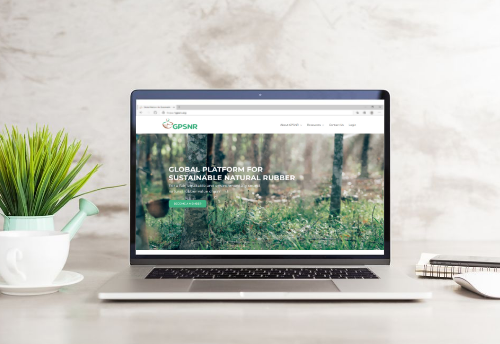
The GPSNR Website Has A New Look!

Share This Post

We’ve refreshed our website and added some exciting features especially for GPSNR members.

Introducing the Members Portal

The Members Portal brings together all the resources available to GPSNR members, and provides easy and quick access to ongoing member activities. Members can access this feature by logging in with the username and password provided by the Secretariat. The account details will be sent to the primary contact of each organization in early January 2021. Members who would like to request for additional accounts may contact Nigel for assistance.

Besides the Members Portal, the website features a revamped navigation menu with new pages featuring our Working Groups, Executive Committee and the Secretariat. GPSNR Articles, tenders and other documents can be accessed under the Resources heading of the new navigation menu.

Have thoughts or feedback about the new look? We want to hear from you! Write in to the Secretariat with your comments.

More To Explore

Rubber, representation and reform – What smallholders bring to the sustainability conversation

By Febrius Wibisana, GPSNR Executive Committee Member & Co-Chair, GPSNR Smallholder Inclusion Working Group

For those who do not know me yet, my name is Febrius Wibisana and I have been a rubber smallholder in Indonesia for over 25 years. At GPSNR, I represent the smallholder category at the Executive Committee level. I am also the co-chair of the Smallholders Representation working group.

In June 2022, I was invited by the Partnership for Forests or P4F to the P4F Forum with their partners and projects from across the world. They wanted me to speak about my experience at GPSNR on smallholder inclusion in the sustainability conversation in natural rubber. The experience gave me the opportunity to put some thought into our work over the last three years – the challenges, the successes and carving the path forward.

I am writing this to share some of those reflections with my fellow GPSNR members.

Reflection 1: It is impossible to have holistic sustainability solutions in natural rubber without smallholder participation

GPSNR Impacts & Assurance Associate Si Yuan and myself at the P4F Forum in London

We live in a world where 6 million smallholder farmers produce almost 90% of the world’s natural rubber. In such a world, any conversation on change in this supply chain has to include smallholders. 

In its second General Assembly in 2020, GPSNR members passed a resolution to include smallholders as a category within the membership. We started with 28 odd smallholders, including myself, engaging in conversations on sustainability, capacity building and the meaning of true inclusion and having the smallholder voice heard at various decision making levels. Today, I represent over 130 smallholders across 10 countries in the GPSNR Executive Committee. 

To bring smallholders into each conversation, we work closely with country level champions and local government entities for outreach and engagement. Interpretation facilities and key documents being translated to smallholder languages are some small but significant steps we take at GPSNR to further facilitate smallholder participation.

Reflection 2: Membership does not guarantee active participation

While many of our smallholder members are actively engaged in core decision making and at the working group level, many find it difficult to do so. The digital divide, language barriers and a skewed equation of structural power could be some key reasons for this. Some smallholders simply may not have the time for it. 

Yet, as we embark on transforming the entire supply chain, we need active smallholder voices to join and remain in the GPSNR fold. To this end, the smallholder representation working group has put forward a resolution with proposed changes in smallholder membership structure, where smallholders will have to participate in the General Assembly to take up ordinary membership. All others will be classified as affiliate members by default. You can take a look at the resolution here

Reflection 3: Making a supply chain sustainable requires thorough capacity building at all levels

There are more than 2 million smallholders in Indonesia. Yet, despite being the largest producer, it has the lowest productivity in the world. This is because of diseases and poor planting materials. Many other rubber producing nations face similar problems. 

If we are to make this supply chain sustainable, equitable and fair, and achieve the desired state that the GPSNR Theory of Change spells out, smallholders have to be equipped with the skills and resources. The capacity building working group has already kicked-off the first such projects in Indonesia with SNV-Proforest and Koltiva. GPSNR has also received funding pledges from Renault, Goodyear, Michelin and Pirelli for other projects, but scaling them requires more. Funding information is available here for any one in the natural rubber industry. 

Capacity building will also equip smallholders to participate further in GPSNR decision making and other processes. 

As we move forward, I am energised by the progress GPSNR has made so far on smallholder participation. In our attempt to move towards more active engagement, we need the support of all our members. Our ability to meet in person will further strengthen this support, and I look forward to working with all of you to transform the supply chain. 

News

GPSNR Working Groups Update: June 2023

Strategy and Objectives Working Group: 

The Traceability pilot field trials for the Risk Subgroup, led by consortiums Agridence and Koltiva, are now in full swing. Agridence provided a midpoint update during the June Hybrid meetings, highlighting their progress thus far.

Looking ahead, the Risk Subgroup is actively strategizing the next steps for ASI’s deliverable on the Risk Assessment Framework. This includes conducting internal piloting and aligning the tool with GPSNR commissioned studies to identify any potential gaps.

In an effort to standardize country levels within the tool, the Risk Subgroup will be issuing a Request for Proposal (RFP) to engage consultants who can contribute their expertise. Furthermore, the Risk Subgroup is in the preliminary stages of discussions with the Basel Institution, exploring a potential collaboration to address corruption risks in the supply chain. 

The Assurance Model Task force will convene to receive updates on the alignment of Key Performance Indicators (KPIs) and the due diligence system, ensuring that progress is being made and objectives are being met. In order to create an Assurance Manual under the Members Progress Model, an RFP will be crafted and sent to consultants. This step aims to gather the necessary input and expertise to develop a comprehensive manual.


Smallholders Representation and Capacity Building (SCB) Working Group: 

The Smallholders Policy-Equivalent (SPE) Taskforce has successfully presented the final recommendations to the SCB WG, marking a significant milestone in their work. They are actively working towards obtaining endorsement from the SCB WG for their final recommendations as outlined in the report.

The HCSA-HCVN Field Trials have reached an important stage, with the preliminary final report being submitted for review and assessment. The HCSA-HCVN will soon submit the final report, marking the completion of this endeavor.

In an effort to promote knowledge sharing, the digital Knowledge Sharing Platform (KSP) Taskforce organised a meeting on 24th May 2023 for SCB WG members. The objective was to facilitate a better understanding of the KSP, and the service provider has already begun developing new features for the platform.

The Indonesia National Subgroup has taken the initiative to prepare quarterly progress reports for the GAP Coaching and Disease Fighting projects, providing updates to the SCB WG.

Meanwhile, the Thailand National Subgroup is currently in the process of evaluating proposals received for the Thailand GAP Coaching project. The deadline for proposal submissions is 30th June 2023.

The Agroforestry-Income Diversification Taskforce is working to finalize the schedule of workshops planned for 2023-2024.

Lastly, the SCB WG will continue to oversee all ongoing projects.


Policy Toolbox Working Group: 

In order to enhance the reporting process, input has been collected from members through a survey and stakeholder-specific meetings as part of the Year 1 Reporting Review process. The feedback received will play a crucial role in informing revisions to the Reporting Matrix and disclosure requirements for Years 2 and 3, as outlined in the Transparent Reporting Roadmap (TRR). Furthermore, discussions are underway to reach an agreement on the TRR for Year 2 reporting, with the Working Group currently finalizing updates received from the OEMs. To reflect the proposed changes to the reporting matrix, the Reporting Guidance will be updated accordingly, providing clear and comprehensive guidelines for reporting.

The Working Group has carefully selected consultant Petra Westerlaan to propose a quantitative orientation for the reporting matrix. This includes conducting a crosswalk analysis with other established reporting frameworks such as CDP Forest, GRI, and ZSL-SPOTT. The integration of quantification will not only facilitate data aggregation but also simplify the evaluation of annual progress. The consultant’s proposed revisions to the reporting framework will be evaluated and decided upon, and recommendations will be made to improve the reporting process and timelines.

In parallel, the Compliance Panel Terms of Reference (TOR) and operational guidance are being finalized based on the Assurance Model, ensuring a robust framework for ensuring compliance and accountability.


Shared Responsibility Working Group: 

During the face-to-face meeting, the Governance and Guiding principles were presented, highlighting their importance in shaping the future direction of GPSNR. Manufacturers are now required to seek internal approval regarding the Governance Framework and subsequently provide a final version for approval to the GPSNR Executive Committee (EC) and General Assembly.

The SR WG is actively engaged in defining an inclusive shared investment framework, encompassing various forms of contribution such as in-kind support, financial contributions, and external funding. The outcomes of discussions at the Manufacturers category level will play a crucial role in shaping this framework.

Collaborating with the Secretariat and other WGs, the SR WG is committed to revamping discussions on data sharing and value transfer, recognizing their significance in achieving our objectives. These discussions will seek to optimize the sharing of data and the value derived from it.

To provide clarity and transparency, the WG aims to define the value and benefits associated with each category within GPSNR, ensuring that all stakeholders are aware of the advantages and opportunities available.

Furthermore, the WG, in collaboration with the Capacity Building WG, is working on developing a protocol to filter and evaluate proposals based on the Equity definition and the stakeholders identified by the EC. This process will ensure fair and comprehensive evaluation of proposals.

Lastly, an open co-chair position is available, and volunteers are welcomed to contribute their expertise and leadership to drive the WG forward. If you are interested in taking on this role, please step forward and join us in this important endeavor.

By establishing effective governance, inclusive investment frameworks, and clear protocols, we are working towards a sustainable and equitable future for the natural rubber industry. Your participation and engagement are vital to our collective success.

Scroll to Top