

Smallholders Representation Working Group Update – September 2019

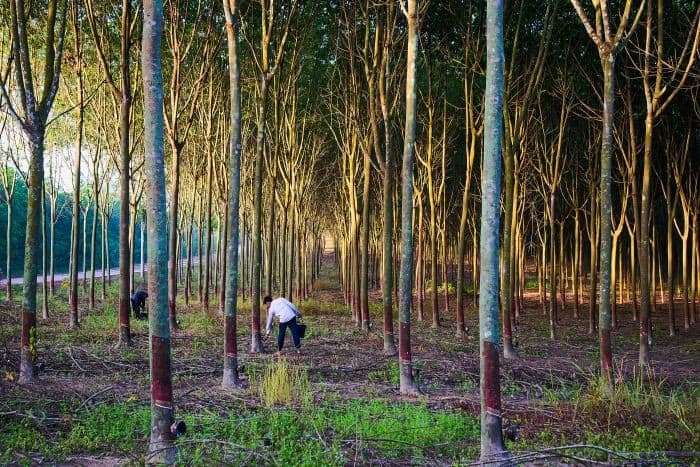
With the support of P4F, Transitions and several of their local partners across the world, we are having the first smallholders workshop in Indonesia for October 7th - 9th.

Share This Post

In the August newsletter we have informed you that we will organize smallholders workshop in 5 different countries with the primary objectives of:

  1. Understanding the local needs and motivations of the smallholder farmers;
  2. Understanding and recommending solutions to the barriers for smallholders and their representative organizations to join and actively participate in the GPSNR;
  3. Observing and explaining the interaction and chemistry between farmers and representative organizations.

Now we are proud to tell you that we are ready to launch the first smallholders workshop in Jambi, Indonesia on October 7th – 9th. 20 smallholders and smallholder representative organizations that have been nominated by several local partners on the ground such as SNV, WWF Indonesia, Kirana Megatara, etc. will meet up in Jambi with various categories of GPSNR working group members to further explore the future of sustainable natural rubber production.  The participants from GPSNR side is limited to 6 persons to ensure the discussions are organically contributed by smallholders.

The 3 days workshop will start with self introduction, understanding each other, understanding the current and future trends of rubber market.  It will spread out to what the platform is and how the platform can work for and with smallholders to create a win-win solution.

Four more workshops to be organized this year after Indonesia will be held in Thailand, Vietnam, Cote d’Ivoire and Brazil.  After the 5 workshops are finished, we will recommend the smallholder representations to the Executive Committee during the General Assembly in March 2020.

Stay tuned for the dates and venues of the upcoming workshops. For more information please contact kobrat@gpsnr.org.

More To Explore

News

Updates from the Working Groups

Strategy and Objectives Working Group

The study on Human Rights and Labour Rights’ Risk Mapping in the Global Natural Rubber Value Chains conducted by independent consultants James Griffiths & Associates Sàrl has been submitted to the Working Group. The full study will be published on the GPSNR website shortly, and the document will be open to stakeholders for comments.

Meanwhile, the Strategy and Objectives Working Group has started to engage with the rest of the Working Groups on aligning with the Theory of Change, and developing platform KPIs. 

The Equity sub-Group has collected comments from the Strategy and Objectives Working Group on the proposed definition of equity. The sub-Group is also exploring engaging consultant James Griffiths to conduct research into equity risks along the natural rubber supply chain, with the plan to have the findings of this study feed into the definition. The sub-Group is currently in the process of establishing an operational plan to define the various workstreams, processes, timelines, and  responsibilities for the Living Income study. The first phase of the study will involve collecting existing benchmark data and doing desk research on national poverty lines, minimum wages, and other relevant information. For greater alignment with the Capacity Building Working Group’s scope, the Equity sub-Group has decided to focus on the same four countries: Côte d’Ivoire, Indonesia, Myanmar and Thailand. 

‘Policy Toolbox’ Working Group

The proposed Policy Components and Baseline Reporting Requirements are open for member consultation until 3 July 2020. Find out more here

‘Capacity Building’ Working Group

The regional sub-Groups described the various findings and recommendations in a presentation to the larger Working Group at the end of May. Eight initiatives were proposed to be shared across the four focus countries, each corresponding to a critical issue identified through stakeholder interviews. These eight initiatives are: access to pure certified (re)planting material, promote the CO2 compensation scheme, promote value rubber wood, improve access to finance, disease fighting, dissemination of Good Agricultural Practices (GAP), income diversification, and improve reach and quality of extension services. Depending on the initiatives recommended for each country, three priority actions have been suggested, forming the basis for a 3-year programme.

The sub-Group for Thailand organized a call with some of Thai smallholder members to seek their opinion on the proposed initiatives. The discussion proved to be a fruitful one, with the smallholders providing advice and suggesting alternative initiatives for the sub-Group to consider. The subgroup for Côte d’Ivoire, which has a smallholder member who is a representative from a local producer association in participation, has also contextualized the proposed initiatives to the local conditions of smallholders and industrial plantations.

The other sub-Groups are also planning to get smallholder members’ input on the capacity building initiatives for their respective countries of focus.

‘Traceability and Transparency’ Working Group

The Working Group has started discussions on risk assessment, and will be linking up with the Policy Toolbox Working Group as well as consultant James Griffiths on the results of the social risks study.

The terms of reference for the two pilot proposals have been finalized after several rounds of additional revision. The documents will be submitted soon to the Executive Committee. 

Smallholders Representation Working Group

The Working Group continues to plan and prepare for the smallholders programme prior to the General Assembly. In particular, terms of reference are being drafted for a professional facilitator to manage the smallholder workshop sessions for the pre-GA programme.

News

GPSNR Working Groups Update: October 2024

Assurance Model Task Force: The Executive Committee (EC) has reviewed the Assurance Model documents and approved them to be submitted to the General Assembly for a vote. The EC has also identified several topics that will require further discussion and finalisation next year. These include minimum requirements, the mechanism for third-party oversight of assessor accreditation, the format and content of assessment result disclosures, the process for assigning third-party assessors, claims, refinements to the classification system for major non-conformities, and a risk-based approach to assessment scheduling. These topics will be presented for a vote at the 2025 General Assembly. For further context, here is the link to the compilation of feedback on the Assurance Model documents received since June, along with responses and changes made based on these comments: https://rubberplatform.sharepoint.com/:b:/s/GPSNRMembers/EWLmS86xDkxMtce9wKEuLjwByB6hU_QXrROu_XJ9DuK0kA?e=ZYYike

Additionally, the EC has agreed that the first three years of assessments (2027-2029) will be conducted annually, with mandatory public disclosure of a category-level summary of the assessments, while company-level disclosure will be optional for those being assessed.


Smallholders Representation and Capacity Building (SCB) Working Group: 18 members from Ghana were approved this month, with an onboarding call held on 10 October 2024. Additionally, the EC Election Campaign call for smallholders took place on 29 October 2024.

Koltiva submitted the final report for the Indonesia GAP Coaching Project (Phase 2) and delivered a final presentation on 17 October 2024. The third phase of the Indonesia GAP Coaching Project is now underway and is currently in the preparation stage. For the Thailand GAP Coaching Project, Koltiva presented the first full-year project results on 22 October 2024. Meanwhile, RAFs completed training for 1,000 farmers ahead of schedule in the Thailand Agroforestry Project. Furthermore, a curated content list and promotional poster for Rubber Wiki have been created to engage smallholders through the Knowledge Sharing Platform.

Looking ahead, a Pre-GA Webinar for smallholders is scheduled for 18 November 2024, and 10 new Cambodian smallholders have applied for membership and are awaiting approval.

For Capacity Building Projects, SCB WG members are requested to review and provide feedback on the final report for the Indonesia GAP Coaching Project (Phase 2) by 28 October 2024. Koltiva will also submit agricultural calendars and training materials for the third phase of this project for SCB WG review by the same date. For the Thailand GAP Coaching Project, Koltiva is revising the full-year review report based on feedback from SCB WG members. Additionally, the Project Management Subgroup will hold its kick-off meeting on 23 October 2024.


Shared Responsibility Working Group: The Shared Investment Panel (SIP) has officially been established following approval from the GPSNR Executive Committee.

The Secretariat is continuing to support the implementation of the Shared Investment Mechanism, with the Project Management Subgroup currently reviewing the proposals received. The SIP will select its co-chairs and plans to hold its kick-off meeting early next month.

Regarding the Value Transfer mechanism, the Executive Committee will form a task force with one representative from each ordinary member category. This task force will work on the next steps to finalise a revised proposal, with the aim to present it at the in-person meeting in February 2025.

Scroll to Top