Notice of GPSNR General Assembly 2020

Share This Post

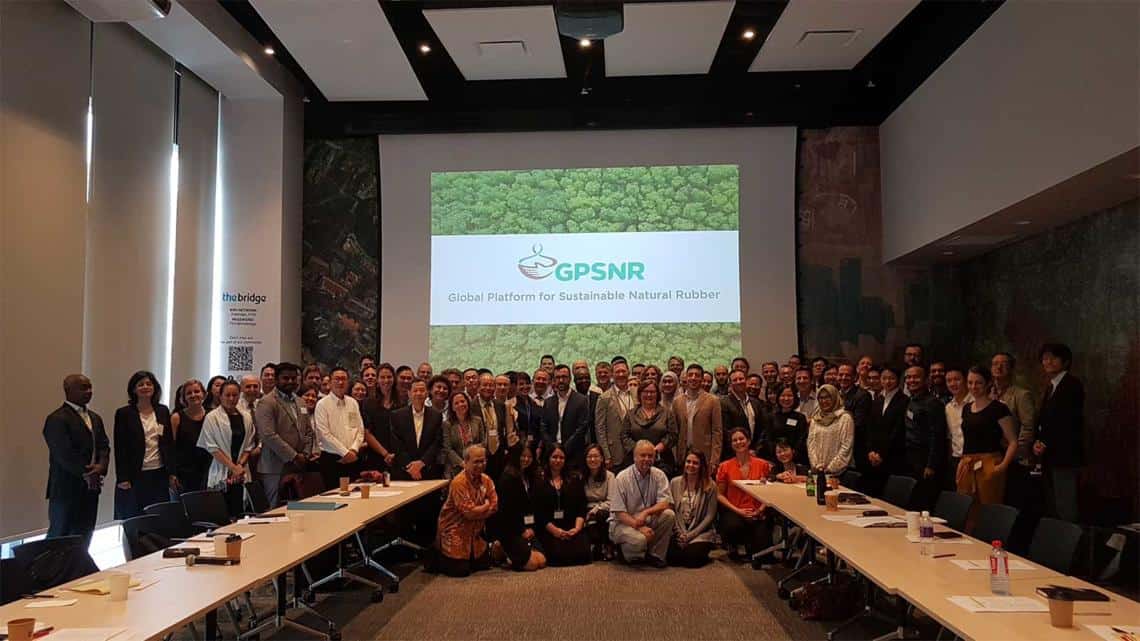
The 2nd General Assembly (GA) of the Global Platform for Sustainable Natural Rubber (GPSNR) will be convened on 23 September 2020. Given the exceptional circumstances surrounding the COVID-19 crisis, the decision has been made to hold the GA virtually.

In making this decision, the GPSNR Executive Committee (EC) considered the importance of the issues that require a vote from GPSNR members, the impacts and consequences of a further postponement of the GA, as well as the current global situation resulting from the COVID-19 pandemic. The EC felt that a GA held online would meet both criteria of ensuring the safety and comfort of GPSNR members while moving forward the effort of the Working Groups in achieving the Platform’s strategic outcomes.

The GA will take place online, with the voting process also conducted electronically. In lieu of face-to-face member engagements, a series of webinars will be organized to prepare members for the GA.

All members are reminded to submit to the Secretariat their proposed resolutions and/ or nominations for election to the Executive Committee no later than 1 August 2020.

More To Explore

News

Stretching the conversation about sustainable natural rubber

By 2050, the number of cars in the world is expected to more than double as urban population growth and rising incomes lead to increased demand for mobility. This has led to louder calls for a more environmentally friendly, energy efficient transport sector.

But what’s been missing from the conversation on sustainable transport so far is a key material that cars and other vehicles literally run on: rubber.

Around 70 per cent of the world’s supply of natural rubber is used to manufacture the wheels that move cars and enable airplanes to take off and land. In the last two decades, the consumption of natural rubber, which is primarily produced in the world’s tropical regions, has been increasing at a steady rate of 5 per cent every year.

Ideal climate and soil conditions in Thailand, Malaysia, Indonesia and Vietnam have made Southeast Asia the epicentre of global rubber production. Ninety per cent of the 13.960 million tonnes of rubber tapped last year came from this part of the world. The last 10 years have also witnessed the expansion of industrial rubber practices in Cambodia and Laos, after land in China and Vietnam began to deteriorate as a result of large-scale rubber production.

On a recent trip to Bintan, an Indonesian island located an hour from Singapore’s shores, Eco-Business got a first-hand look at the reality of smallholder rubber farming in Asia and the challenges of charting a sustainable path for rubber.

Although natural rubber has not received as much attention as fellow tropical commodity palm oil, it creates a similar set of social and environmental problems, from contributing to rapid deforestation to a history of land grabs and human rights violations in the Mekong.

However, unlike palm oil, which is mainly produced in large estates owned by big, family-owned corporations, close to 85 per cent of global rubber is produced by smallholders in Asia, making traceability a major issue in the industry’s quest for sustainability.

“Natural rubber is a crucial element of tyre production, driving the importance of its sustainability,” William Dusseau, manager of technical relations at Cooper tyre and rubber company, told Eco-Business. “A coordinated, universal and standard industry approach is the way to drive solutions in establishing and promoting sustainable natural rubber practices.”

He added that the launch of the Global Platform on Sustainable Natural Rubber (GPSNR), which took place last Thursday at the World Rubber Summit in Singapore, was a significant step in developing and maintaining sustainable rubber standards.

Members of the new platform include major brand tyre companies such as Cooper, Michelin, Pirelli, and Bridgestone and global car manufacturers including BMW Group, Ford Motor Company and General Motors.

GPSNR also includes international non-profit and civil society organisations such as Mighty Earth, Birdlife International and World Wide Fund for Nature (WWF).

According to Jean Bakouma, head of the Forest Program at WWF-France, since the rubber value chain is primarily driven by buyers, tyre manufacturers hold the greatest leverage for improving both the socioeconomic and environmental performance of natural rubber production.

“A robust sustainability policy that is thoroughly implemented by tyre manufacturers must consider sustainable natural rubber as a natural and responsible way to protect forests with high conservation value and high carbon stock, as well as foster other environmental services,” he said.

News

GPSNR Working Groups Update: November 2020

Strategy and Objectives Working Group

The Strategy and Objectives Working Group is currently revising its Terms of References (ToR) to better reflect the plans for further developing GPSNR’s Theory of Change. 

The Request for Proposal (RFP) for a study on environmental impacts, and risks, in the natural rubber value chain has been published. GPSNR members are invited to circulate the RFP to any relevant contacts who might be interested in submitting proposals for this work. The deadline for submission of proposals is 27 November 2020.  

The Equity sub-Group has received the first drafts of the Living Income Gap studies for Indonesia and Thailand, and these are currently in review by both members of the sub-Group as well as the engaged consultants. The extension of the study on Human Rights and Labour Rights’ Risk Mapping in the Global Natural Rubber Value Chains conducted by independent consultants James Griffiths & Associates Sàrl, which focuses on issues of equity, is near its completion phase.

‘Policy Toolbox’ Working Group

The revised Terms of Reference (ToR) for the Policy Toolbox Working Group is being reviewed. Following approval of the ToR, the Working Group will be in a good position to move forward on development of the implementation guidance for stakeholder groups, as well as policy equivalents for civil society organizations and smallholder producers.

The Working Group has also conducted a preliminary revision of the Baseline Reporting Requirements following feedback from GPSNR member companies during the pilot testing stage. To find out more about the Baseline Reporting Requirements pilot testing, check out our latest article, ‘Updates on the GPSNR Baseline Reporting Requirements Pilot Test’.

‘Capacity Building’ Working Group

The Working Group is in the midst of revising its Terms of Reference (ToR) to cater to the shift in focus to implementation plans. The Working Group is also putting together a Good Agricultural Practices (GAP) Task Force that will work to identify and/or refine guiding principles for GAPs appropriate for the sustainable production of natural rubber that cater to both Industrial Plantations and Smallholder Farmers. The goal of this Task Force will be to create a document stating a high-level, international set of GAPs that can be disseminated to national Capacity Building groups for adaptation to local contexts.

The Task Force is currently looking for smallholder members who have experience in Good Agricultural Practices to join the Task Force. They will have the opportunity to collaborate and create the GAPs together with other Task Force members. Interested smallholder members are welcome to contact Aidan for more information.

‘Traceability and Transparency’ Working Group

The Working Group is reviewing the two studies that were commissioned earlier. Plans to review the Working Group’s Terms of Reference (ToR) are also in the works as its members consider the next steps vis-à-vis the findings and conclusions from the studies. 

Smallholder Representation Working Group

Following the fourth international call with smallholder members, the Working Group has consolidated the responses from smallholder members who indicated their interest in participating in our Working Groups. A plan is underway to onboard these smallholder members into the various Working Groups.

Translate »
Scroll to Top