

Empowering Smallholder Farmers: The Path to Deforestation-Free Rubber Supply Chains to Meet the EUDR

Share This Post

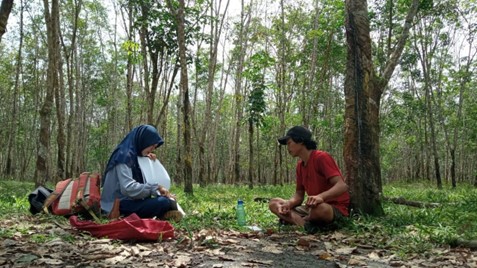
On Wednesday, 19 April 2023, the European Union approved the upcoming Deforestation-Free Regulation (EUDR) to prevent companies from placing products linked to deforestation onto the EU market. As part of the wider vision of the EU Green Deal, it will demand companies who import rubber or rubber-based products (e.g., tires) to verify that their supply chain is deforestation-free. It’s a push towards an era of environmental accountability, yet it also sparks debates about the path forward for the rubber industry.

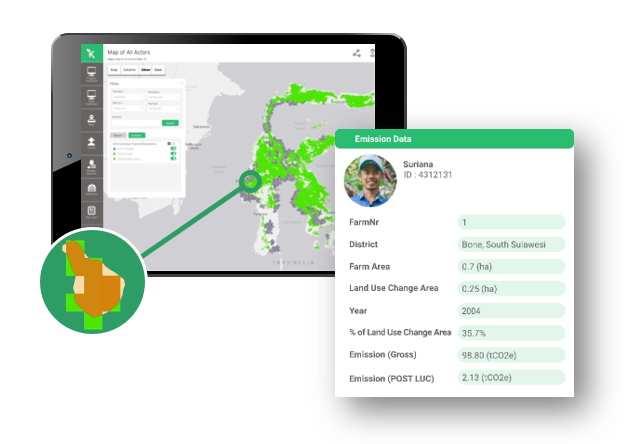
The EUDR requires companies to have traceability to the farm level, including geo-location data and proof of land legality. According to the regulation, every plot below 4 hectares requires at least a GPS point coordinate, while plots above 4 hectares must have a polygon.

Fulfilling these traceability requirements is no small feat. There is concern from the industry that smallholder farmers may be unintentionally excluded from global sustainable supply chains. Ensuring smallholder farmer inclusion requires a holistic sustainability approach.  There is no doubt that the rubber industry has begun moving towards sustainable rubber sourcing through combined industry efforts like the Global Platform for Sustainable Natural Rubber (GPSNR). However, the reality is that most imported rubber to the EU currently does not meet the regulatory requirements as the industry lacks traceability to the farm level. As 85% of the global natural rubber supply is supplied by approximately 6 million smallholder farmers, the implications of this regulation could be far-reaching and severe, particularly for these smallholder farmers.
However, there is a lot of hope.

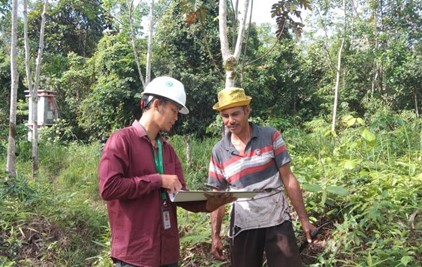
Firstly, even though it might seem challenging, traceability to the farm level is doable – even for the rubber industry. This has been demonstrated in a GPSNR-funded farmer training and coaching project primarily focused on supporting smallholders to apply Good Agriculture Practices (GAP). Koltiva, the company I am working for and who was selected to be the implementing partner for this project, has mapped more than 4,000 farmers and their farms to help them to prepare for the EUDR in less than a year.
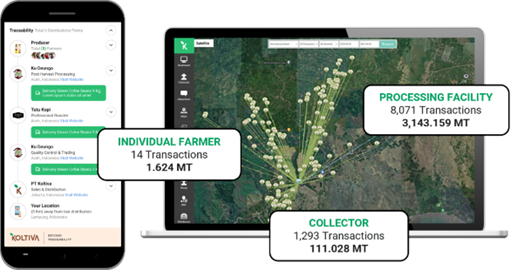
Secondly, we believe that traceability to the farm is scalable. In our work with clients in 51 countries, we were able to map almost 1 million smallholder farmers through our KoltiTrace platform. Platforms such as KoltiTrace allow companies to map and verify their supply chain, including transaction traceability from Seed to Tire and deforestation-free analysis.

Finally, EUDR could have a long-term positive impact on smallholder farmers. Currently, many rubber farmers do not have proper land titles. Due to the EUDR geolocation requirements, many smallholders will, for the first time, have access to a map of their own plantation, allowing them to legalize their land.

And it doesn’t stop there. Smallholders have largely been invisible in global supply chains. Traditional development programs have tried to engage them, but they have not reached the expected results. Many smallholders still have no access to knowledge, no access to capital,  and soon will also be excluded from the carbon economy.

I believe that it’s possible to bridge these gaps. Traceability to farm level and digitalizing the first mile of agricultural value chains can lay the foundation for holistic sustainability interventions. Enabled by technology and data, the sector can equip farmers with critical knowledge, improve their access to finance, actively support farmers to apply low-carbon practices and enable them to reap the benefits of the growing carbon economy.

While traceability cannot be achieved overnight, the rubber industry is in a unique position. At GPSNR, the major industry players are sitting at one table. Through combined efforts and data-sharing agreements of shared supplier data, the rubber industry can become a leading example of how to meet the EUDR.

About the Author:
Luca Fischer is Koltiva’s Program Manager, leading Koltiva’s boots-on-the-ground implementation projects in the rubber sector globally. He bridges the gap between the client, product, and field teams.

Luca has over five years of work experience in sustainable sourcing, smallholder livelihood, and climate-smart agriculture development. He graduated with an M.Sc. in Sustainable Resource Management from the Technical University of Munich, Germany.

About Koltiva (click here for more information)
Established in 2013, Koltiva is a leading agritech company for enterprises to make their global supply chains traceable, inclusive, and climate-smart. Backed by Koltiva’s human-centered technology with boots-on-the-ground professional service, Koltiva supports some of the largest multinational companies by digitizing and verifying global supply chains, focusing on enhancing traceability, inclusiveness, and sustainability. Koltiva combines triple-tech (AgriTech, FinTech, and ClimaTech) to improve producers’ outcomes and profitability while building more sustainable supply chains.
More To Explore

News

Seeing Through to a Solution: Traceability and Transparency Tools and Technology Studies

Deforestation, land grabbing, and human and labour rights violations have been associated with the production of natural rubber. In order to transform the global natural rubber supply chain into a fair, equitable and environmentally sound one, it is crucial that we work to reduce such social and environmental risks. This is by no means an easy feat with about 6 million smallholder farmers producing around 85% of the world’s natural rubber; the complexities of the supply chain make it difficult for buyers to ensure that sustainable practices are employed for rubber cultivation and processing. Recognizing the importance of enhancing traceability and transparency in the natural rubber supply chain to support the identification and mitigation of social and environmental risks, GPSNR established the Traceability and Transparency Working Group.

Over the past few months, the Working Group has commissioned two studies around traceability and transparency tools and technology. The reports were submitted by the consultants at the end of October 2020. The findings from each report are summarized below.

Spatial Data & Mapping Tools for Detecting Deforestation and Threats to HCVS Areas in Rubber Production Landscapes

Report developed by Zoological Society of London (ZSL)

This report reviews a variety of spatial mapping tools and approaches which may be employed by GPSNR and its members to address deforestation and degradation risk in rubber supply chains.

The key recommendations from this study are that GPSNR members should pool resources to collectively commission landscape-level HCV and HCS screening for key rubber-producing countries and these should be updated periodically. Spatial data maps from this process should be made publicly available to encourage cross-sectoral collaboration on tackling deforestation.

HCV/S datasets may then be integrated into satellite monitoring platforms and combined with near-real time monitoring of deforestation and forest degradation. This will allow accurate spatial analysis of the impacts of rubber production in key forested landscapes. GPSNR members may select different satellite monitoring tools or service providers, based on their own needs and budget. For upstream actors closer to the source, satellite monitoring may allow for preventative measures to be taken at the early stages of deforestation.

The full Executive Summary can be viewed here.

Review of Transparency & Traceability Tools and Solutions

Report prepared by e-Audit Hong-Kong Ltd

This report presents options on supply chain transparency and/ or product traceability solutions that GPSNR may consider as well as recommendations to select the most suitable transparency/traceability solutions for the GPSNR initiative.

A range of solutions currently implemented in commodity industries similar to the natural rubber industry were reviewed and evaluated, resulting in the identification of several key elements that will need to be considered to select the most suitable and cost-efficient solution.

The report also considers three potential infrastructure options (centralized, hybrid and decentralized) that should be considered as they have profound implications on the range of supply chain transparency and product/batch traceability solution(s) that GPSNR may consider to adopt.

This report concludes that the technology currently available makes it possible for all GPSNR key requirements to be integrated into one single solution. However, such a centralized solution may be costly and cumbersome to implement. At this stage of development of the GPSNR initiative it is recommended that GPSNR starts implementing a more flexible hybrid solution, with a centralized infrastructure/ data hub focused on reporting and monitoring of clearly defined performance KPIs, that can be connected through APIs to existing field level risk assessment, risk mapping and traceability solutions currently implemented by GPSNR members.

The full Executive Summary can be viewed here.

News

GPSNR Working Groups Update: January 2021

Strategy and Objectives Working Group

In our December update, we reported that the Working Group would be conducting interviews with the shortlisted candidates who had responded to the Request for Proposal for a study on environmental impacts, and risks, in the natural rubber value chain. The Working Group has since completed their interviews and will soon be making a decision on who to award the contract to.

The refinement of GPSNR’s Theory of Change is also underway, with a planning call having taken place on Monday this week. The call involved nominated representatives  from across all GPSNR’s Working Groups, working to chart the plan for a collaborative effort to refine the Platform’s Theory of Change.

In other news, several Thai smallholders have been onboarded into the Working Group and, after an introductory call with the Co-Chairs,  are now participating in the Working Group calls.

As the Equity Sub-Group prepares to present the living income studies to GPSNR members, more details will be conveyed to members nearer the date.

‘Policy Toolbox’ Working Group

Following the approval of the GPSNR Policy Framework, the Policy Toolbox Working Group will develop Implementation Guidance and future Reporting Requirements as they pertain to the specific policy components in the framework.  

In order to achieve this, a Request for Proposal (RFP) has been posted for a fixed term consultancy to facilitate the development of the Implementation Guidance and Reporting Requirements for each of the three stakeholder categories: natural rubber producers/processors and traders, tire makers and other natural rubber product manufacturers, and auto makers and other end users.  GPSNR members are invited to circulate the RFP to any relevant contacts who might be interested in submitting proposals for this work. The deadline for submission is 5 February 2021.

The Implementation Guidance and Reporting Requirements will vary depending on where a member company sits within the natural rubber supply chain. As such, GPSNR will invite the creation of category focus groups to enable broader participation of members from the three stakeholder categories (although focus groups can also include members from other stakeholder categories). The details on recruitment for these focus groups will be announced sometime next month.

Apart from facilitating the development of category-specific Implementation Guidance by reviewing guidance and requirements from other initiatives, the consultant will also facilitate discussion sessions with the focus groups to finalize the implementation guidance for each stakeholder category.

‘Capacity Building’ Working Group

In 2020, the Working Group proposed national capacity building strategies for four countries as a starting point. Following the Executive Committee’s endorsement of the strategies, the Working Group is embarking on the next step of putting these plans into action on-the-ground. The Working Group is looking for interested members to form National Sub-Groups mandated to oversee, guide and implement the strategies. The Working Group will conduct a webinar in mid February to share the strategies with GPSNR members. Check out our article, ‘From Strategy to Implementation: Next Steps for Capacity Building’ for more on this story.

‘Traceability and Transparency’ Working Group

The two studies around traceability and transparency tools and technology commissioned in 2020 by the Working Group are ready to be shared with GPSNR members. Read our article, ‘Seeing Through to a Solution: Traceability and Transparency Tools and Technology Studies’ for more on this topic.

Smallholder Representation Working Group

The Working Group’s revised Terms of Reference (ToR) was approved by the Executive Committee during its monthly call in January. Under the revised ToR, the Smallholder Representation Working Group has identified two main objectives for its work moving forward: the first, to support the creation of an active smallholder community within GPSNR and the second, to extend the on-boarding of smallholders from rubber producing countries. The Working Group will be planning its activities for the year head, ensuring that they support and contribute towards achieving these new objectives. 

As a start, the Working Group will be looking to onboard smallholder members into the group, as well as facilitate the organization of the next Smallholder Category Call.

Translate »
Scroll to Top