
GPSNR Shared Investment Mechanism 2027 – In-Kind Contribution (IKC) Application Opens

Share This Post

The GPSNR Shared Investment Mechanism (SIM) is now accepting applications for 2027 IKC.

The SIM is a joint funding framework through which GPSNR Ordinary Members (currently mandatory for Manufacturer Members) collectively support sustainability and capacity-building initiatives across the natural rubber value chain.

Under the Shared Investment Framework, Manufacturer Member organisations may submit eligible projects for consideration under the SIM. Applications will be evaluated against the SIM Funding Principles, Open Market Criteria, and the overall quality of the proposal.  If the project is approved, the actual eligible expenses incurred for that project may be recognised as an IKC and applied towards the organisation’s SIM contribution. 

Who can Apply?
IKC applications are open to GPSNR Manufacturer Members only. While project proposals may be prepared with support from project implementers or other third-party organisations involved in project delivery, the application must be submitted by the GPSNR Manufacturer Member, who remains responsible for the accuracy and completeness of the submission.

If any other GPSNR Ordinary Members wish to submit an IKC application, please contact the Secretariat before preparing your application.

Assessment Process
All IKC applications will undergo a technical evaluation conducted by the Project Management Working Group evaluation panel. Applications recommended by the PMWG will then be submitted to the Shared Investment Panel (SIP) for final endorsement. Following endorsement, applicants may commence implementation for new projects or continue implementation for existing projects.

Application Resources
Before preparing your application, please ensure that you have reviewed the following documents:

Your application should clearly demonstrate how the project aligns with the SIM Funding Principles and satisfies the Open Market Criteria.

Applicants must use the prescribed templates and follow all submission guidance. Proposals that do not comply with the required templates or application requirements will not be considered.

Submission Timeline

Call for Applications Open 10 August 2026
Applicant Webinar 18 August 2026, 3.00-4.00PM SGT
Submission Deadline 15 September 2026, 11.59PM SGT

All required application documents must be submitted by the deadline above. Late or incomplete submissions will not be accepted.

Submission Instructions

Step 1: Review the application guidance.
Please read the FAQ – In-Kind Contributions_V2 FAQ document before preparing your submission.

Step 2: Complete the required templates.
Applicants must use the prescribed templates and complete all required sections as instructed. Please do not alter the format, structure, or formulas within the templates. Proposals that do not comply with these requirements will be rejected.

  1. SIM2027 In-Kind Contribution Project Application Template_V3.docx
  2. SIM2027 In-Kind Contribution Project Budget Template_V2

Step 3: Submit your application via email.
Email the completed proposal and budget template to cheewei@gpsnr.org and amanda@gpsnr.org using the following subject line: [SIM2027 IKC Proposal Submission] – [Project Name]
Please ensure that all key points of contact for the project within your organisation are copied (CC’d) on the submission email.

Applicant Webinar

Applicants are strongly encouraged to attend the SIM 2027 IKC Applicant Webinar, which will be held on 18 August 2026, 3:00–4:00 PM (SGT).

The webinar is designed to help applicants prepare the strongest possible submission. During the session, the Secretariat will:

  • provide an overview of the application process;
  • explain the proposal and budget templates;
  • walk through the assessment criteria;
  • answer questions during a live Q&A session.

Whether you are a first-time applicant or have previously submitted a proposal, attendance is highly recommended to ensure your application fully addresses the evaluation criteria and meets the submission requirements.

Sign up here by 17 August, 12.00PM SGT.

Contact Us

If you have any questions regarding the application process, please contact cheewei@gpsnr.org and amanda@gpsnr.org

More To Explore

Members

Member Consultation on proposed GPSNR Policy Components and Baseline Reporting Requirements (Members Version)

Natural rubber faces a similar set of environmental, social and economic issues as other agricultural commodities such as palm oil, but the spotlight on sustainability has only been recently turned towards this key raw material, 70% of which goes into tire production. The launch of GPSNR marked a significant step towards developing sustainable standards for natural rubber, with member organizations making a commitment to 12 Sustainable Natural Rubber Principles

The Policy Toolbox Working Group was established to develop a guiding framework for GPSNR members to implement policies and practices that align with the 12 Principles. Two key documents, the Policy Components and Baseline Reporting Requirements, have emerged after a year of discussion and drafting. 

The Policy Components outline specific commitments that GPSNR company members should include in their sustainable natural rubber policies, while the Baseline Reporting Requirements indicate qualitative and quantitative sustainability data to be reported to the Secretariat for the first year of reporting. 

A members webinar was held on 16 June, where the Co-Chairs of the Policy Toolbox Working Group explained the purpose, process and next steps surrounding the two documents. 

Several members have volunteered to participate in an ongoing pilot testing of the Baseline Reporting Requirements. The goal of the pilot is to refine and finalize the Baseline Reporting Requirements based on company feedback.

The proposed Policy Components and Baseline Reporting Requirements are now open for member consultation until 3 July 2020.

All GPSNR members are invited to download the draft documents from the links below and submit your feedback by accessing this link.

Additionally, you may view the recording and slide deck of the 16 June webinar from the links below.

Download Policy Components 

Download Baseline Reporting Requirements

View 16 June webinar recording

View 16 June webinar slide deck

13 Global Tire Companies Co-Invest to Deliver Healthcare to 1,800 Rubber Farming Households in Côte d’Ivoire

Groundbreaking GPSNR initiative with social enterprise Elucid targets the overlooked link between farmer health and supply chain resilience

SINGAPORE, 23 April 2026:  The Global Platform for Sustainable Natural Rubber (GPSNR) today announced a three-year partnership with Berlin-based social enterprise Elucid to deliver healthcare access to 1,800 rubber farmers and their households. This will benefit approximately 9,000 individuals  in Côte d’Ivoire. The initiative is funded through GPSNR’s Shared Investment Mechanism (SIM) by 13 tire and rubber companies: Aeolus Tyre Co., Ltd., Apollo Tyres Ltd., Balkrishna Industries Ltd. (BKT), The Goodyear Tire & Rubber Company, Hankook Tire & Technology, Kumho Tire Co., Inc., Maxxis International, Nokian Tyres plc, Prometeon Tyre Group, Sumitomo Riko Company Limited, Sumitomo Rubber Industries, Ltd., Toyo Tire Corporation, and The Yokohama Rubber Co., Ltd.

The partnership addresses a gap the industry has long overlooked: the direct impact of farmer health on supply chain productivity. Medical emergencies cost Côte d’Ivoire an estimated 853 million USD in cocoa exports in 2017 alone. With many farmers cultivating both cocoa and rubber, the implications for the natural rubber sector are significant. Research from Ghana  shows that enrollment of farmer households in national health insurance increases their agricultural investment in several areas by approximately 40%, according to a 2024 study published in Agricultural Finance Review.

“We talk constantly about improving yields and farm management practices, but we’ve missed something fundamental,” said GPSNR CEO Stefano Savi. “A farmer who can’t afford to see a doctor when they’re sick or who cannot go to the farm because their child is unwellcan’t be productive. Healthcare isn’t separate from supply chain resilience. It’s central to it.”

A Critical Gap for the World’s Fourth-Largest Rubber Producer

Côte d’Ivoire is critical to global rubber supply chains, yet smallholder farmers who drive production across the country’s forest regions face severe healthcare barriers. The country ranks 187th out of 195 globally for quality of care, and only 32% of essential medicines are available in the public health sector, according to a 2020 health systems assessment. While two-thirds of the population are enrolled in the national health insurance scheme (CMU) on paper, fewer than 4% actually used their insurance card in 2025, due to administrative hurdles and facility-level barriers.

When farmers lack reliable healthcare, medical emergencies force them to sell assets and abandon farm improvements — a direct risk to the supply chains that depend on them.

A Comprehensive, Four-Part Approach

The initiative combines four components:

  • Enrollment in CMU national insurance for all participating farmers and households
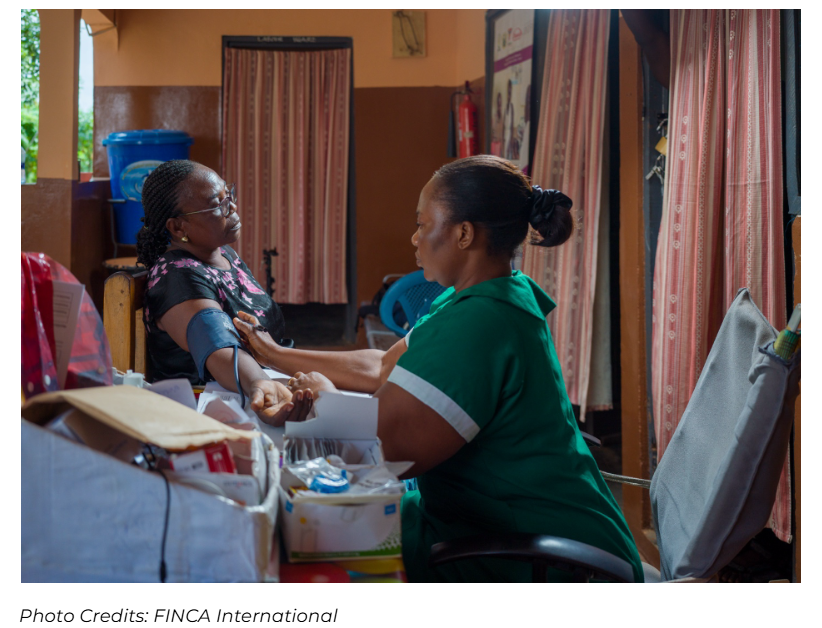
  • Elucid’s emergency and essential care scheme covering WHO-accredited medications and life-saving services
  • Quality improvements at 15 healthcare facilities serving the target communities
  • Community awareness programs connecting health to economic wellbeing

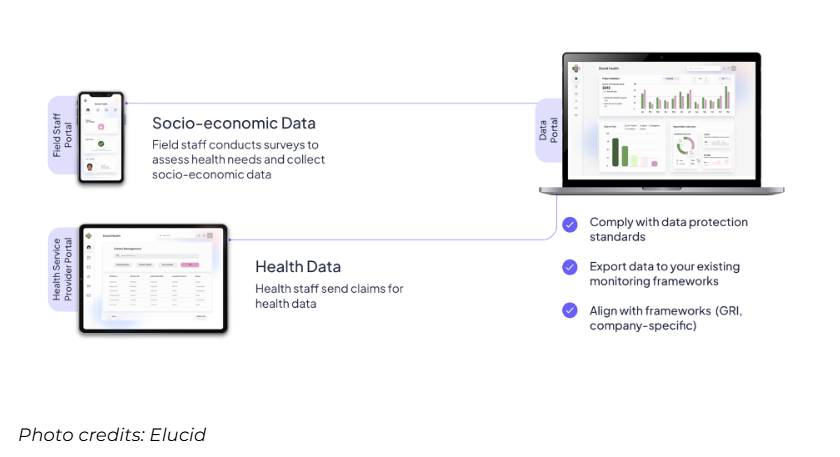
Elucid’s digital platform will track all data in real time, enabling transparent impact reporting throughout the project. The program aims to increase healthcare visits from fewer than 200 to over 1,800, drive CMU enrollment from less than 30% to over 90%, and prevent more than 150 catastrophic health expenditure events each year. Half of beneficiaries will be women and 20% will be children under 18.

“This is about demonstrating what’s possible when the private sector invests in making national health systems work for farmers,” said Sambhavna Biswas, Partnerships Manager at Elucid. “This model can be replicated across rubber-growing regions and adapted to other agricultural sectors. Everyone in the value chain benefits when the people at its foundation are healthy and economically secure.”

Farmer enrollment begins in August 2026, with healthcare access improvements continuing until  January 2029. From December 2027, the project will transition toward long-term sustainability, building cooperative capacity to maintain health support for their members.

About GPSNR: The Global Platform for Sustainable Natural Rubber is a multi-stakeholder initiative bringing together tire manufacturers, vehicle makers, natural rubber processors and traders, and civil society organizations to develop and implement sustainability policies and practices across the natural rubber value chain. More on sustainablenaturalrubber.org

About Elucid: Elucid is a Berlin-based social enterprise providing data-driven healthcare services for farmers and workers in global supply chains across six countries and five agricultural sectors. Learn more at www.elucid.social

Media Contacts: GPSNR: Bani Bains | bani.bains@gpsnr.org;

 Elucid: Sambhavna Biswas | sambhavna.biswas@elucid.de

Translate »
Scroll to Top