

Secretariat Update – August 2019

The Global Platform for Sustainable Natural Rubber (GPSNR) and the International Rubber Study Group (IRSG) have agreed to build cooperation by signing a memorandum of understanding (MoU).

Share This Post

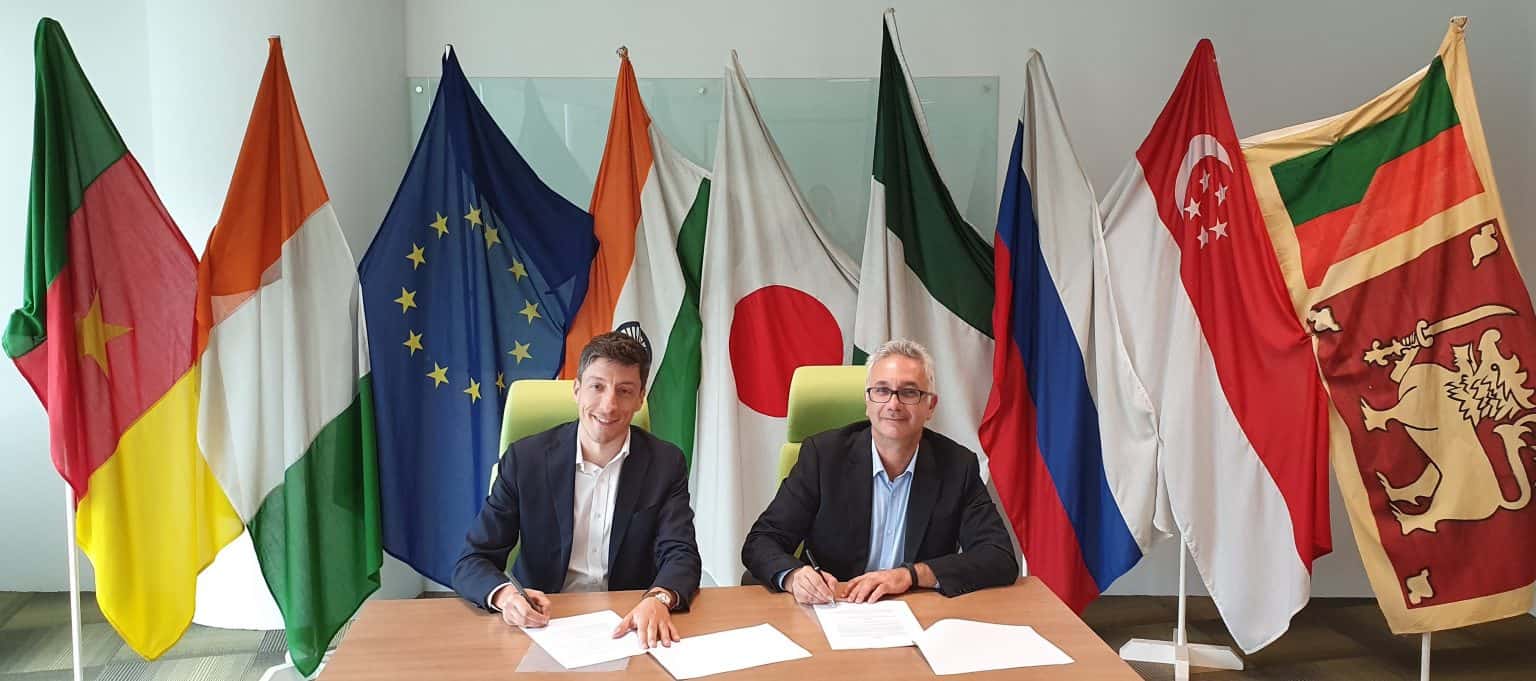
The signing of the MoU took place at IRSG’s Office in Singapore, on the 6 August 2019 by Mr Salvatore Pinizzotto, IRSG Secretary General and Mr Stefano Savi, GPSNR Director. The MoU will have the aim of consolidating, developing and detailing the cooperation between the two organisations. It will also contribute to the effectiveness to achieve the organisations’ common objectives in the field of sustainable production and consumption of natural rubber.

The cooperation will have a focus on Sustainability in the Natural Rubber Value Chain, particularly in relation to socio-economic and environmental aspects linked to the natural rubber sustainable production and consumption. Immediate opportunities for collaboration have been identified in the following areas: 

  1. Definition of Natural Rubber Sustainability and identification of appropriate standards, building on the activity carried out from IRSG in the SNR-i project.
  2. Natural Rubber Sustainability and socio-economic impacts on smallholders in producing countries.
  3. Land tenure right and sustainable income of smallholders in producing countries.
  4. Impact of climate change in rubber plantations and mitigation of risks.

The International Rubber Study Group (IRSG) was established in 1944 and is the only intergovernmental organization that brings the world’s rubber producing and consuming stakeholders together. The IRSG is the forum for the discussion of matters affecting the supply and demand for natural as well as synthetic rubber. IRSG is at the forefront in conducting activities and research on the sustainability of the natural rubber economy. IRSG has 36 member Governments and more than 700 industry members covering the whole natural rubber value chain.

The Global Platform for Sustainable Natural Rubber (GPSNR) is an international, multistakeholder, voluntary membership organization, with a mission to lead improvements in the socioeconomic and environmental performance of the natural rubber value chain. Development of the GPSNR was initiated by the CEOs of the World Business Council for Sustainable Development (WBCSD) Tire Industry Project (TIP) in November 2017. Currently the Platform has 51 Members including Producers, Processors & Traders, Tire makers and other rubber makers/buyers, Carmakers, other downstream users and Financial Institutions, and Civil society.

Representatives from each of these stakeholder groups have contributed to the development of the Singapore-based platform and the wide-reaching set of priorities that will define GPSNR strategy and objectives.

More To Explore

News

Secretariat Update – August 2019

The signing of the MoU took place at IRSG’s Office in Singapore, on the 6 August 2019 by Mr Salvatore Pinizzotto, IRSG Secretary General and Mr Stefano Savi, GPSNR Director. The MoU will have the aim of consolidating, developing and detailing the cooperation between the two organisations. It will also contribute to the effectiveness to achieve the organisations’ common objectives in the field of sustainable production and consumption of natural rubber.

The cooperation will have a focus on Sustainability in the Natural Rubber Value Chain, particularly in relation to socio-economic and environmental aspects linked to the natural rubber sustainable production and consumption. Immediate opportunities for collaboration have been identified in the following areas: 

  1. Definition of Natural Rubber Sustainability and identification of appropriate standards, building on the activity carried out from IRSG in the SNR-i project.
  2. Natural Rubber Sustainability and socio-economic impacts on smallholders in producing countries.
  3. Land tenure right and sustainable income of smallholders in producing countries.
  4. Impact of climate change in rubber plantations and mitigation of risks.

The International Rubber Study Group (IRSG) was established in 1944 and is the only intergovernmental organization that brings the world’s rubber producing and consuming stakeholders together. The IRSG is the forum for the discussion of matters affecting the supply and demand for natural as well as synthetic rubber. IRSG is at the forefront in conducting activities and research on the sustainability of the natural rubber economy. IRSG has 36 member Governments and more than 700 industry members covering the whole natural rubber value chain.

The Global Platform for Sustainable Natural Rubber (GPSNR) is an international, multistakeholder, voluntary membership organization, with a mission to lead improvements in the socioeconomic and environmental performance of the natural rubber value chain. Development of the GPSNR was initiated by the CEOs of the World Business Council for Sustainable Development (WBCSD) Tire Industry Project (TIP) in November 2017. Currently the Platform has 51 Members including Producers, Processors & Traders, Tire makers and other rubber makers/buyers, Carmakers, other downstream users and Financial Institutions, and Civil society.

Representatives from each of these stakeholder groups have contributed to the development of the Singapore-based platform and the wide-reaching set of priorities that will define GPSNR strategy and objectives.

News

Developing a GPSNR Assurance Model

Assurance is defined as demonstrable evidence that specified requirements relating to a product, process, system, person or body are fulfilled. In other words, thinking about Assurance is to ponder the question: how do we protect the credibility of our claim?

The Executive Committee (EC) has been working on an Assurance model concept since late 2019. Following the request for proposal put up in August 2019, an external consultant was engaged to conduct a review of the options for various Assurance Models that would support the desired outcomes of the Platform. In early 2020, the report from the consultant, which discussed existing approaches to Assurance and included recommendations for GPSNR’s approach to Assurance, was submitted to the EC. 

The EC considered the input from the report and expanded upon its findings by conducting a thorough benchmarking of existing Assurance model approaches. Following this exercise, the EC identified and defined several key characteristics that merit inclusion in GPSNR’s Assurance model concept.

In the process of developing these key characteristics, the EC also took into account the purpose, value and benefits of an Assurance model. 

A robust Assurance model would provide a credible and effective system to manage risks by supporting the achievement of sustainability impacts, focusing on accurate assessments of compliance, ensuring the effectiveness of its assurance strategies through good information management systems, and finding additional ways to create value for stakeholders.

A webinar will be held on Friday, 26 June 2020 to introduce GPSNR members to a proposed Assurance model concept.

A tabled summary of the process and timelines around the development of the Assurance model concept up until now is included below:

January 2020 Consultant report submitted to EC for review
January – February 2020 EC discussions
March 2020 Deep dive into Assurance model benchmark by EC sub-group
April 2020 EC agrees on basic characteristics to build Assurance model from
April – June 2020 Design, discussion and refinement within EC

Scroll to Top