

The Executive Committee has approved revisions to the GPSNR Fee Schedule.
In accordance with the terms set out in the GPSNR Statutes, the new Fee Schedule will take effect from 23 February 2021.
To view the revised Fee Schedule, click here.
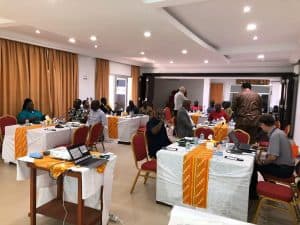
The appointed Country Champions have been in contact with the smallholders to ensure a good understanding of GPSNR through familiarization with the Statutes and Code of Conduct. These socialization efforts were carried out by means of teleconferencing, some taking place with the aid of interpreters. To complement these preliminary engagement sessions, the Working Group is creating a customised programme for the smallholders prior to this year’s General Assembly. It is important for the smallholders to meet face-to-face and have the chance to get to know each other, considering that some of them have never stepped foot outside their own country. As they will have to decide who will represent them in the Executive Committee if the new ‘Smallholder Producers’ membership category is approved, interaction with each other is imperative for them to make informed decisions.
The sub-Group specially formed to focus on this issue has proposed a first draft of the programme, which was discussed at the recent Working Group meeting. At the moment, the programme includes sessions for the smallholders to learn more about each other, about GPSNR and the impact of their votes. They will also guide the smallholders in identifying their priorities and needs, and include sharing from GPSNR members in the other categories, so that smallholders can better understand how they can be effective members and work with others at both Working Group and Executive Committee levels. Aside from these proposed sessions, a half-day field trip is also being considered as a socio-cultural component.
Looking towards the future, the Working Group is having ongoing discussions on how best to integrate smallholders into the various Working Groups. The language barrier has been identified as a key issue to address in order to achieve full inclusivity of smallholders. .
Deforestation, land grabbing, and human and labour rights violations have been associated with the production of natural rubber. In order to transform the global natural rubber supply chain into a fair, equitable and environmentally sound one, it is crucial that we work to reduce such social and environmental risks. This is by no means an easy feat with about 6 million smallholder farmers producing around 85% of the world’s natural rubber; the complexities of the supply chain make it difficult for buyers to ensure that sustainable practices are employed for rubber cultivation and processing. Recognizing the importance of enhancing traceability and transparency in the natural rubber supply chain to support the identification and mitigation of social and environmental risks, GPSNR established the Traceability and Transparency Working Group.
Over the past few months, the Working Group has commissioned two studies around traceability and transparency tools and technology. The reports were submitted by the consultants at the end of October 2020. The findings from each report are summarized below.
Report developed by Zoological Society of London (ZSL)
This report reviews a variety of spatial mapping tools and approaches which may be employed by GPSNR and its members to address deforestation and degradation risk in rubber supply chains.
The key recommendations from this study are that GPSNR members should pool resources to collectively commission landscape-level HCV and HCS screening for key rubber-producing countries and these should be updated periodically. Spatial data maps from this process should be made publicly available to encourage cross-sectoral collaboration on tackling deforestation.
HCV/S datasets may then be integrated into satellite monitoring platforms and combined with near-real time monitoring of deforestation and forest degradation. This will allow accurate spatial analysis of the impacts of rubber production in key forested landscapes. GPSNR members may select different satellite monitoring tools or service providers, based on their own needs and budget. For upstream actors closer to the source, satellite monitoring may allow for preventative measures to be taken at the early stages of deforestation.
The full Executive Summary can be viewed here.
GPSNR members can read the entire report here.
Report prepared by e-Audit Hong-Kong Ltd
This report presents options on supply chain transparency and/ or product traceability solutions that GPSNR may consider as well as recommendations to select the most suitable transparency/traceability solutions for the GPSNR initiative.
A range of solutions currently implemented in commodity industries similar to the natural rubber industry were reviewed and evaluated, resulting in the identification of several key elements that will need to be considered to select the most suitable and cost-efficient solution.
The report also considers three potential infrastructure options (centralized, hybrid and decentralized) that should be considered as they have profound implications on the range of supply chain transparency and product/batch traceability solution(s) that GPSNR may consider to adopt.
This report concludes that the technology currently available makes it possible for all GPSNR key requirements to be integrated into one single solution. However, such a centralized solution may be costly and cumbersome to implement. At this stage of development of the GPSNR initiative it is recommended that GPSNR starts implementing a more flexible hybrid solution, with a centralized infrastructure/ data hub focused on reporting and monitoring of clearly defined performance KPIs, that can be connected through APIs to existing field level risk assessment, risk mapping and traceability solutions currently implemented by GPSNR members.
The full Executive Summary can be viewed here.
GPSNR members can read the entire report here.